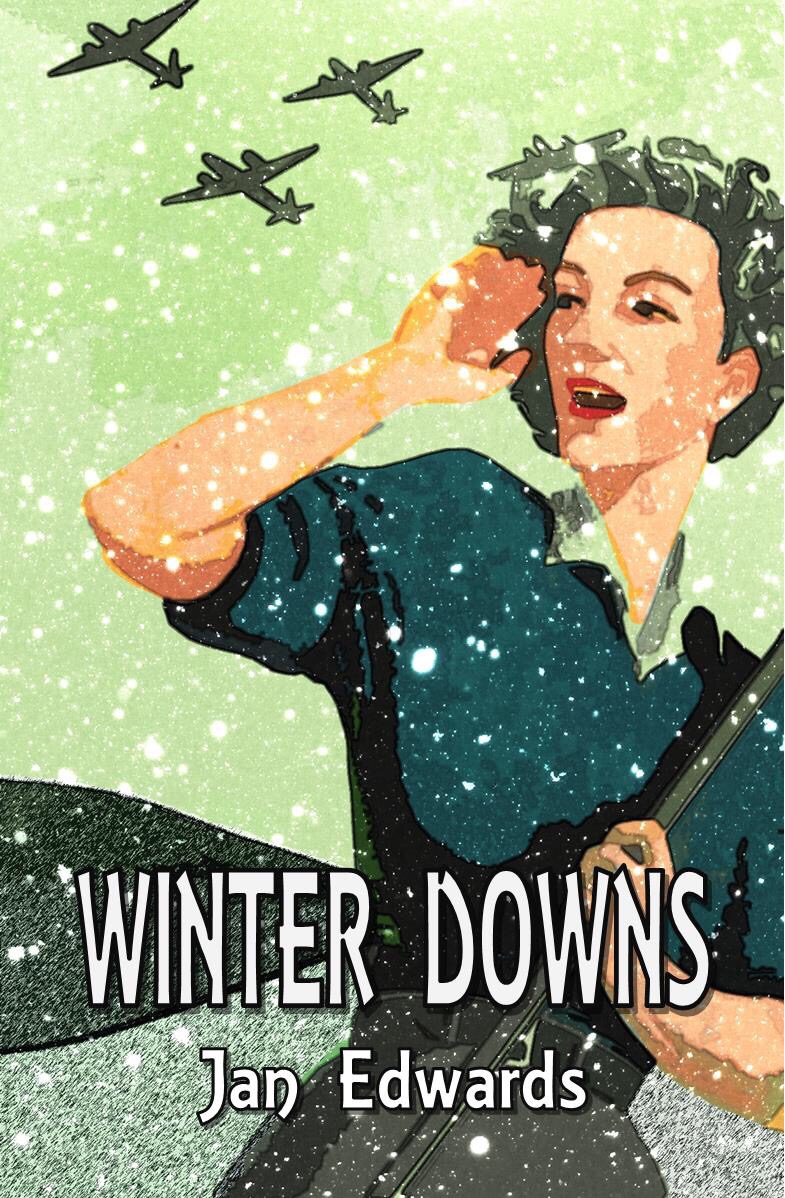
Blog Tour: Winter Downs by Jan Edwards @Jancoledwards


Goodreads|Amazon US|Amazon UK
Release date: June 3, 2017

Publisher: Penkhull Press

Blurb: 

In January of 1940 a small rural community on the Sussex Downs, already preparing for invasion from across the Channel, finds itself deep in the grip of a snowy landscape, with an ice-cold killer on the loose. 


Bunch Courtney stumbles upon the body of Jonathan Frampton in a woodland clearing. Is this a case of suicide, or is it murder? Bunch is determined to discover the truth but can she persuade the dour Chief Inspector Wright to take her seriously?


Winter Downs is first in the Bunch Courtney Investigates series. 

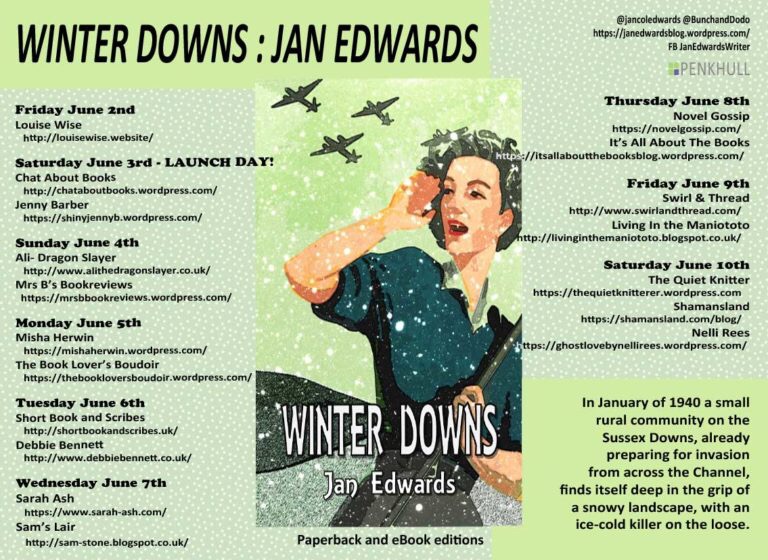
Welcome to my stop on the blog tour for Winter Downs. I have a Q and A with the author to share today. 

Q&A


1. What’s a typical writing day for you look like? Describe your perfect writing environment.


I don’t have a typical writing day, though I’d probably get a lot more done if I did! My best writing time is the wee small hours between 11pm and 2 am. It’s a habit I developed when my kids were small and it was the only time of day when there was a modicum of quiet. Oddly I can write using the laptop in front of the TV or play music when I write to create white noise. I am too easily distracted; usually in researching tiny details that I can’t write past. I have to know if X brand of toothpaste was available in 1940. Or what the applicator in a 1930s handbag powder compact was made from. These things intrigue me and I’m a mine of totally useless information.


2. How did you get started writing? Was it something that you’ve always loved?


I began writing my own stories when I was till at infant school. I suspect that was down to living in a very rural area that lacked a library to pillage and because I was sick a lot so writing relieved the boredom of long spells in bed. I once spend several weeks (aged around eight years old) being a character in a book I was trying to write and referring to myself in third person. My father had explained why some books were first and some third person – yes I was that child with the constant ‘why’ on my tongue – and as the whole concept fascinated me I had to try it out for myself. The family were highly amused and it took me years to live it down!


3. Who are your favourite writers/inspirations?

Always a tricky question because I read anything and everything until I was well into my teens. Only then did I start to gravitate more toward crime/horror/fantasy, and that due mainly to my abiding passion for folklore and myths. I grew up on a diet of Enid Blyton and Arthur Ransome and abridged classics.

I came across Michael Moorcock’s science fantasy in 1969 and was blown away! It was such a new concept to me at the time. Other authors? Jane Austen, Daphne Du Maurier, Raymond Chandler, Agatha Christie, Dorothy L Sayers et al. I love Peter James’s fiction and a zillion other modern crime writers but I have also always read classic crime by the bucket load, which has influenced the whole process of dreaming up and writing Winter Downs, which is set in 1940.


4. Anything you can tell us about upcoming projects?


Winter Downs is the latest project and is the first in a planned series of crime novels. To quote the rear cover, “In January of 1940 a small rural community on the Sussex Downs, already preparing for invasion from across the Channel, finds itself deep in the grip of a snowy landscape, with an ice-cold killer on the loose.”


I’ve had a number of Sherlock Holmes short stories published – full details on my blog at:

https://janedwardsblog.wordpress.com/bibliography/short-fiction/ 

so crime in various forms has been uppermost. I was also part of the script writing team for a Dr Who DVD that includes White Witch of Devil’s End – which is released in November I believe? https://www.galaxy4.co.uk/product.thtml?id=3557&vts=gvJ5AgE


5. Normally how do you develop plots/characters? Brief us on your process.


I have always been an advocate of the Stephen King school of writing in that I don’t plot too closely. That way I am as surprised as the reader when things happen. Crime, especially whodunnits, are a little different because the clues have to be there for a reader to pick up on. I still write from the gut but make sure that those clues are all there in the rewrites.


Likewise characters can develop by osmosis. In Winter Downs, for example, the main characters were meant to be Bunch and her sister Daphne (Dodo). But when Chief Inspector Wright walked on stage he just failed to leave and Dodo got shoved into the background just a little. Wright was just the perfect foil for Bunch and I really had no option but to give him some room.


6. On average, how long does it take you to write a book?


It’s that proverbial piece of string! First draft for Winter Downs took just a few months. The far harder and longer part came with the editing.


7. What’s the best compliment that you’ve received about your work?

A recent review for my Leinster Gardens ghost story collection said: “I thought Nanna Barrows (was) my favourite, until I read R for Roberta, then I changed my mind again when I read Redhill Residential, then The Clinic, then Wade’s Run…” It was humbling to have a reviewer be unable to pick a favourite.

But it was the late and very great Tanith Lee that made me blush. She was kind enough to read my short story collection Fables and Fabrications and called it a …fascinating and engrossing read that is subtle and elegantly elusive. High praise from the Queen of dark fantasy!


10. If writing wasn’t your career what would you be doing?


Who knows? I’ve already tried my hand at so many things. I was a Master Locksmith for 20 years but also been a bookseller, microfiche photographer, stable girl, sold motorcycles, grown house plants, worked as a lab technician and been a librarian. Currently in addition to being a writer I am a practising Reiki Master.


8. Favourite character from one of your own novels?


I have a noir cosmic horror character Cpt Georgi, very much in the Agent Carter mould, that I write about in short fiction now and then. When it comes to my Holmes stories I always have a soft spot for Watson. I am exasperated by some of the TV and Film versions where Watson is portrayed as a buffoon. In the books he was far from being that. Yes Holmes may appear quicker on the uptake when it comes to analysing the evidence but he is a genius and faster than everyone (with the possible exception of Mycroft).

But Bunch Courtney is my favourite. She is often frustrated by the restrictions placed in woman of that era and fully intends to take advantage of the opportunities that the circumstance has to offer. She is in control of her own destiny throughout Winter Downs and I am looking forward to following in her wake in the next two novels already in planning and beyond.


9. Preferred method for readers to contact you?

Readers can contact me via the contact page on my blog https://janedwardsblog.wordpress.com/contact/ or on my facebook page https://www.facebook.com/Janedwardsbooks/


 About the Author: 
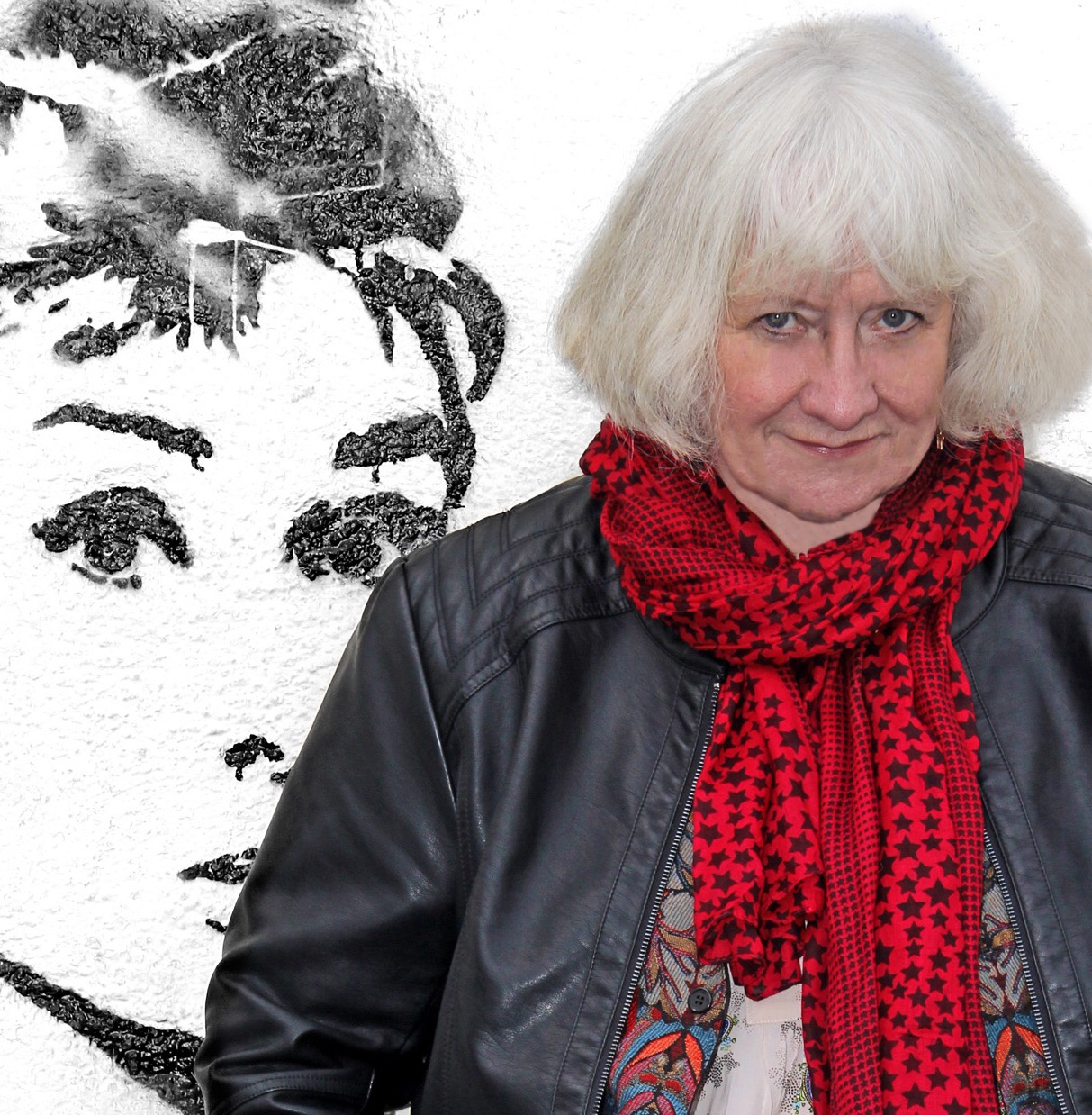

Jan Edwards is a Sussex-born writer now living in the West Midlands with her husband and obligatory cats. She was a Master Locksmith for 20 years but also tried her hand at bookselling, microfiche photography, livery stable work, motorcycle sales and market gardening. She is a practising Reiki Master. She won a Winchester Slim Volume prize and her short fiction can be found in crime, horror and fantasy anthologies in UK, US and Europe; including The Mammoth Book of Dracula and The Mammoth Book of Moriarty. Jan edits anthologies for The Alchemy Press and Fox Spirit Press, and has written for Dr Who spinoffs with Reel Time Pictures. 
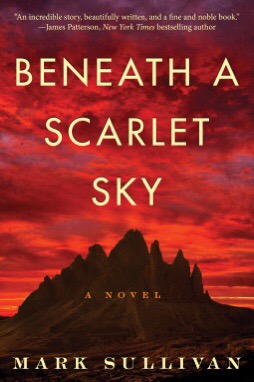


Q & A: Mark Sullivan author of Beneath a Scarlet Sky 


Goodreads|Amazon
Release date: May 1, 2017

Publisher: Lake Union 

Genre: Historical Fiction 

Blurb: 

Based on the true story of a forgotten hero during one of history’s darkest hours.


Pino Lella wants nothing to do with the war or the Nazis. He’s a normal Italian teenager—obsessed with music, food, and girls—but his days of innocence are numbered. When his family home in Milan is destroyed by Allied bombs, Pino joins an underground railroad helping Jews escape over the Alps, and falls for Anna, a beautiful widow six years his senior.


In an attempt to protect him, Pino’s parents force him to enlist as a German soldier—a move they think will keep him out of combat. But after Pino is injured, he is recruited at the tender age of eighteen to become the personal driver for Adolf Hitler’s left hand in Italy, General Hans Leyers, one of the Third Reich’s most mysterious and powerful commanders.


Now, with the opportunity to spy for the Allies inside the German High Command, Pino endures the horrors of the war and the Nazi occupation by fighting in secret, his courage bolstered by his love for Anna and for the life he dreams they will one day share.


Fans of All the Light We Cannot See, The Nightingale, and Unbroken will enjoy this riveting saga of history, suspense, and love. 


I was supposed to be sharing a review of this book today but unfortunately life got in the way when my whole family was struck with a stomach bug. Sigh. So instead, I have a Q & A with the author to share, enjoy! 

Q & A: 

Q: A self-described adventure nut, you’ve said you’re attracted to stories where characters are pushed to their limits and Pino Lella, the hero of BENEATH A SCARLET SKY, is definitely one of these characters. He risked his life guiding Jews across the Alps into neutral Switzerland, then became a spy inside the German High Command. The unlikeliest of heroes, he witnessed unspeakable atrocities that pushed him to his limits. What made him able to do this? What set him apart from so many other people at that time?

A: I am interested in heroes who are pushed to their limits, forced to go beyond themselves, and Pino is certainly one of them. After spending 11 years with this story, I came to believe that Pino was able to survive all these incredible situations because of his basic decency, his gratitude, and his love of life; because of his deep emotional intelligence; and due to his fundamental belief in the miracle of every moment, even the darkest ones, and in the promise of a better tomorrow, even when that promise was not warranted.

That philosophy enabled Pino to go beyond who he was, to be selfless in moments of crisis. He conquered the dangers in the winter Alps by focusing on the people he was saving, their emotions and longings. As a spy I think he believed overwhelmingly in the value of his mission, and he felt compelled to bear witness to the atrocities committed by Nazis in Italy. Pino was also extraordinarily young, and like any brash young man he rarely seemed to let doubt cloud his thinking, high in the Alps, or down in Milan in the presence of General Leyers. And, of course, Anna gave him strength.

Q: When you first talked to Pino in real life, he was reluctant to tell his story, believing he was more a coward than a hero. Yet, you convinced him to talk and ended up going to hear the story in Italy. Tell us about that.

A: The first time I called him from the States, he said he didn’t understand why I’d be interested in him. I told him that from what I knew of his story he was an uncommon hero. His voice changed and he told me he was more a coward than a hero. That only intrigued me more, and after several more calls he agreed to my coming to Italy to hear the story in person and in full.

When I first went to see him I stayed for three weeks. We talked for hours, which turned into days and weeks as I listened to him summon up the past. But by the time I got to Pino, more than six decades had passed. Memories change and fade with time. And a tortured mind will block out traumatic events, bury them in the subconscious, or shade them so the victim can look at them from a tremendous distance, and with little emotion.

He was evasive at times. He had a self-deprecating nature and often downplayed his role and the dangers he faced. I often had to press him to just describe what happened versus filtering it.

Then the deeper story began to surface. We laughed. We cried. We became friends. It ended up being one of the most emotional and rewarding experiences of my life.

Q: You have a background as an investigative journalist for both newspaper and magazines, why didn’t you tell this story as straight narrative non-fiction?

A: That was the original intent, but after years of trying to dig up the documented, fully-corroborated story, I threw up my hands. So many other characters had died before I heard about Pino Lella, and the Nazis had burned so many documents surrounding his story that even after ten years of research I had to make informed assumptions in the narrative.

Once I surrendered to that, I knew I was in the realm of historical fiction and writing a novel. I gave in to it and adjusted by switching obligations. The obligations of the non-fiction writer and the novelists are different. The former must hew to the documented facts and eye-witness accounts. The latter should portray the deeper, emotional truths. I went in that direction, and am glad I did.

Q: Tell us about your friendship and what Pino has meant to you.

A: January of 2006 was a terrible time for me. My brother had drunk himself to death the prior June. My mother had drunk herself into brain damage. I’d written a book no one liked and was involved in a lingering business dispute. That day I realized darkly that my insurance policies were more valuable than my life and potential in the future. During a snow storm, I seriously considered driving into a bridge abutment on an interstate freeway near my home, but I was saved by thoughts of my wife and sons. I was as shaken as I’ve ever been, and did indeed pray for a story.

Over the course of learning about Pino’s story, and as Pino opened up more and more during our conversations, I experienced his deep pain and marveled at his ability to go on after being so depressed and traumatized (he too had contemplated suicide). I had to comfort him repeatedly during the course of his long recounting, and I was moved again and again. During that time, and apart from the details of his war story, Pino taught me about life and his values and the many, many joys he’d been blessed with after handing over General Leyers to U.S. paratroopers on the last day of the war. It made me realize how much I’d put in jeopardy even thinking about suicide. I had a great, loving wife, and two remarkable sons. I had an amazing story to tell. I had a new and dear friend. I was more than lucky. Leaving Italy that first time, I felt blessed to be alive.

I went home a different person, grateful for every moment, no matter how flawed, and determined to honor and tell Pino’s story to as many people as possible. I just never thought it would take as long as it did.

Q: You spent almost nine years researching this story, hampered, in part, by a kind of collective amnesia concerning Italy and Italians during WWII, and the widespread burning of Nazi documents as the war ground to a close. The Nazi occupation of Italy and the underground railroad formed to save the Italian Jews have received little attention. Why have historians taken to calling Italy “The Forgotten Front”?

A: It did take me an awful a long time to dig up the details that surrounded Pino’s story. Over the years and between projects, I spent weeks in the Nazi War Archives in Berlin and Friedrichsburg, Germany, and in the U.S. Archives in Maryland. I went back to Italy two more times, and to Germany a second and third time. All along the way, I was hampered by the burning of Nazi documents in the last days of the war, especially by Organization Todt.

As mentioned, there also was and is a collective amnesia concerning Italy and Italians during WWII. It’s due in part to the savagery that so many Italians, like Pino Lella, witnessed in the last days of the conflict. Northern Italy descended into anarchy, and public revenge killings were widespread. It was so bad that many brave partisan fighters shut their mouths and never spoke of what they saw as the Nazis fled toward the Austrian border. One old partisan told me they were young and wanted to forget those terrible times. “No one talks about the war in Italy,” he said. “So no one remembers.”

I also think historians have tended to ignore Italy because General Eisenhower decided to pull multiple divisions out of Italy in the late spring of 1944 to bolster the fight for France. After liberating Rome in June of that year, the progress of the weakened Allied forces remaining in Italy ground to a virtual halt. And the focus of journalists, historians, and novelists largely turned to the drama of D-Day and its aftermath.

I think that worked in my favor to a certain extent. WWII Italy felt overlooked and unexamined, which made it even more exciting for me as I worked on the book. I realized that in addition to Pino’s story I could tell the broader history of the fight for what Churchill called “the soft underbelly of Europe.”

Q: Why didn’t Pino Lella talk about his experiences for more than 60 years? Is that unusual?

A: It’s not unusual. As I researched the book I found that heroes and tragic victims of the Italian battlefront were commonplace, and often intentionally unheralded or un-mourned. Pino and many, many others who survived the war in Italy blocked out their experiences. They witnessed men and women at their most noble and at their most savage. They rose to challenge after challenge, responded, and in victory and in tragedy promptly buried their memories and told no one.

In my experience, older Italians don’t talk freely about the war. To younger generations it’s as if it never happened. One old partisan fighter I interviewed told me that when he reluctantly went to a high school in Milan recently at the request of a history teacher to talk about the war, the students laughed at him. They said the things he’d seen could never have happened.

Q: You’ve said that global bestselling author James Patterson, your co-author on the Private series, “gave you a master class in commercial fiction.” What are some of the lessons he taught you, and how have they changed your writing life?

A: Mr. Patterson did give me a master class in commercial fiction. I’d written 10 novels before he asked me to collaborate with him, and I thought I knew what I was doing. I didn’t. Not really. For the most part I’d winged it in my earlier works of fiction, writing draft after draft before the real story appeared. Patterson believed in thinking out the plot up front, that novel writing is like house building—you have to be an architect first and design the layout and frame before you start thinking about anything else. Patterson also taught me that we were entertainers, not educators, and that our stories were driven by suspense and mystery but focused on emotion. He really hammered that into me, and I think my writing’s improved vastly because of it.

About the Author:

Mark Sullivan is the acclaimed author of eighteen novels, including the #1 New York Times bestselling Private series, which he writes with James Patterson. Mark has received numerous awards for his writing, including the WHSmith Fresh Talent Award, and his works have been named a New York Times Notable Book and a Los Angeles Times Best Book of the Year. He grew up in Medfield, Massachusetts, and graduated from Hamilton College with a BA in English before working as a volunteer in the Peace Corps in Niger, West Africa. Upon his return to the United States, he earned a graduate degree from the Medill School of Journalism at Northwestern University and began a career in investigative journalism. An avid skier and adventurer, he lives with his wife in Bozeman, Montana, where he remains grateful for the miracle of every moment.