It’s Monday! What Are You Reading? #imwayr


It’s Monday! What Are You Reading? is a weekly post to share what you recently finished reading, what you’re currently reading, and what you plan on reading this week. It’s hosted by Kathryn at Bookdate.

What I Read Last Week: 


The Honeymoon was a crazy psychological thriller. 

Ella’s Ice Cream Summer was a hilarious read. 

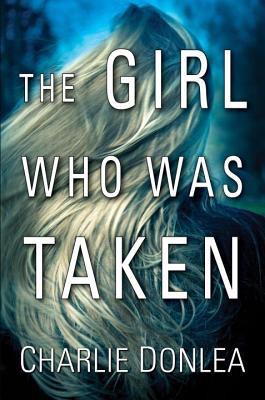
The Girl Who Was Taken was great, twisty read. 

Promises to Keep was the second in a truly lovely series, there’s still time to enter my giveaway too! 

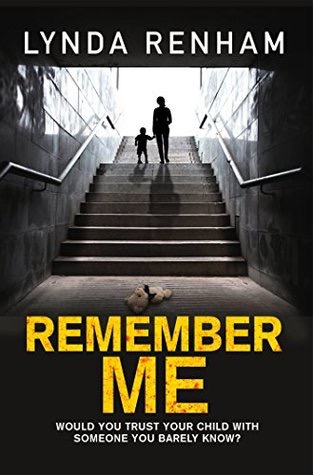
Remember Me was a really entertaining, addictive read. 

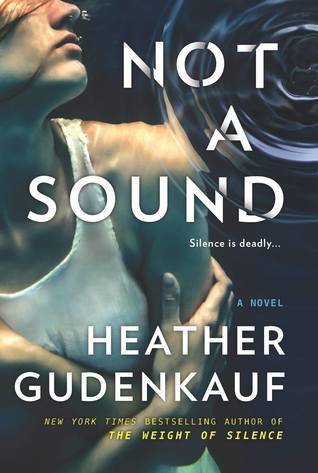
Not a Sound was a good mystery with a unique lead. 
Currently Reading: 


Up Next: 


I didn’t have the greatest reading week, my kids were sick AGAIN and stuff was crazy in my house! Hopefully everyone in my house stays healthy.

How was your week? 

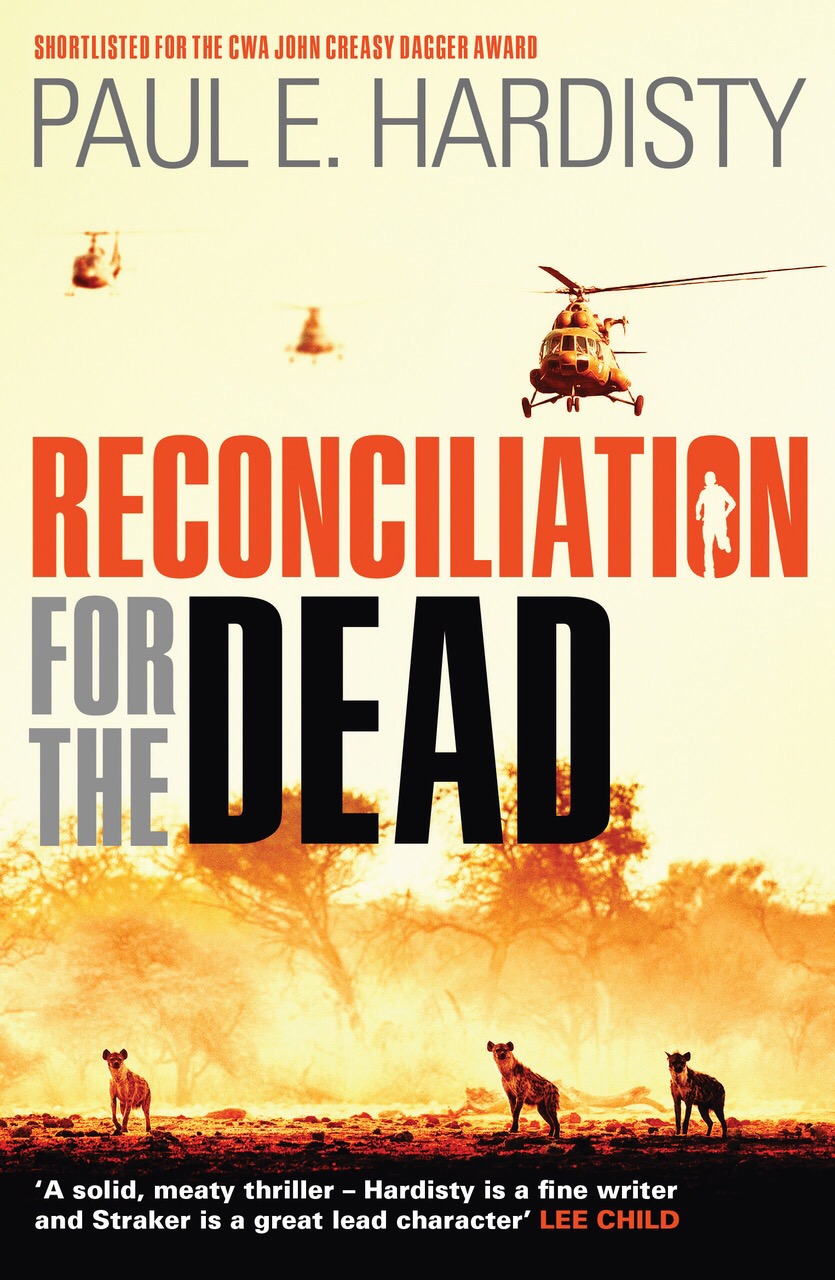
Blog Tour: Reconciliation for the Dead by Paul E. Hardisty @Hardisty_Paul @OrendaBooks


Goodreads|Amazon US|Amazon UK
Release date: May 1, 2017

Publisher: Orenda Books

Genre: Thriller

Blurb: 

Fresh from events in Yemen and Cyprus, vigilante justice-seeker Claymore Straker returns to South Africa, seeking absolution for the sins of his past. Over four days, he testifies to Desmond Tutu’s newly established Truth and Reconciliation Commission, recounting the shattering events that led to his dishonourable discharge and exile, fifteen years earlier. It was 1980. The height of the Cold War. Clay is a young paratrooper in the South African Army, fighting in Angola against the Communist insurgency that threatens to topple the White Apartheid regime. On a patrol deep inside Angola, Clay, and his best friend, Eben Barstow, find themselves enmeshed in a tangled conspiracy that threatens everything they have been taught to believe about war, and the sacrifices that they, and their brothers in arms, are expected to make. Witness and unwitting accomplice to an act of shocking brutality, Clay changes allegiance and finds himself labelled a deserter and accused of high treason, setting him on a journey into the dark, twisted heart of institutionalised hatred, from which no one will emerge unscathed. Exploring true events from one of the most hateful chapters in South African history, Reconciliation for the Dead is a shocking, explosive and gripping thriller from one finest writers in contemporary crime fiction. 


I’m so pleased to welcome you to my stop on the blog tour for Reconciliation for the Dead today. I have an extremely interesting guest post from the author himself. 


Living and Dying in a Time of Plunder


Paul E. Hardisty


There is a scene in my new novel, Reconciliation for the Dead, set in apartheid-era South Africa, where the protagonist (Claymore Straker), comes upon a herd of elephants. It is 1981, and Clay is a young South African soldier fighting the communist insurgency in Angola. This is a war that his parents, the leaders of his country, and the officers who command him, have cast as a struggle for survival. The elephants Clay happens upon are dead. They have been slaughtered and their tusks hacked out with chainsaws. Even the babies were killed, and the little milk tusks dug out. The image stays with him, haunts him, even as the bodies of his human enemies and brothers-in-arms stack up.

​The scene is one that, in reality, was repeated across Africa during the conflicts that raged in the continent during that cold-war period, including in neighbouring Rhodesia and Mozambique. Teak and other hardwoods were cut extensively to pay for weapons and ammunition, and diamonds were mined using slave labour to enrich warlords and corrupt officials. Hippos were machined gunned in the rivers by jumpy ill-fed recruits in guerrilla armies. Rape was widespread. It was a time of plunder. With the breakdown of law and order that comes with civil war, protection of common assets disappears, and those who are armed take what they want. As the Roman philosopher Marcus Tullius Cicero said: ‘In times of war, the law falls silent.’

​And of course, in many parts of the world, this same kind of behaviour continues. Civil strife leads to war. Factions resort to plunder to support their cause, and always it is the poor and the innocent who suffer most.

​Claymore Straker, as a young man, comes face to face with one of the more cynical examples of wartime plunder in modern history. Unable to stand by and do nothing, spurred on by his idealistic friend, Eben Barstow, he begins to peel back the layers of deception and secrecy thrown up by the apartheid regime. What he finds will change his life forever, and fundamentally shape who he is.

The historical events described in Reconcilation for the Dead happened. As I writer, I try to create a thrilling, breathless ride for the reader, so that by the end, he or she feels as if they had gone ten rounds in the UFC cage with a top fighter. In short, I want to entertain. So hold on tight. But I also hope that by placing the reader right in the middle of the chaos, with the kind of immediacy that allows them to see and feel the action as it unfolds, that I can inform. The wars in Africa during that period are still recent enough to be relevant. It wasn’t until 1994 that Nelson Mandela was elected first black president of South Africa. So, while Claymore Straker wants to forget this time of plunder, perhaps we still have something to learn from it.  

 About the Author: 


Canadian Paul Hardisty has spent 25 years working all over the world as an engineer, hydrologist and environmental scientist. He has roughnecked on oil rigs in Texas, explored for gold in the Arctic, mapped geology in Eastern Turkey (where he was befriended by PKK rebels), and rehabilitated water wells in the wilds of Africa. He was in Ethiopia in 1991 as the Mengistu regime fell, and was bumped from one of the last flights out of Addis Ababa by bureaucrats and their families fleeing the rebels. In 1993 he survived a bomb blast in a cafe in Sana’a, and was one of the last Westerners out of Yemen before the outbreak of the 1994 civil war. Paul is a university professor and Director of Australia’s national land, water, ecosystems and climate adaptation research programmes. He is a sailor, a private pilot, keen outdoorsman, conservation volunteer, and lives in Western Australia. His debut thriller The Abrupt Physics of Dying was shortlisted for the CWA John Creasey (New Blood) Dagger.


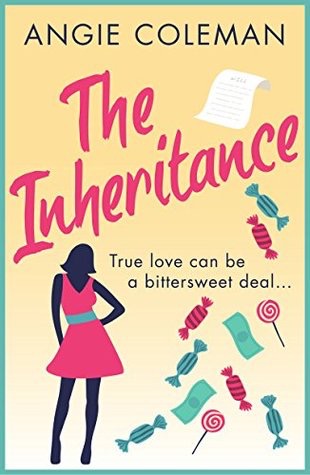
Blog Tour: The Inheritance by Angie Coleman @Aria_Fiction


Goodreads|Amazon US|Amazon UK
Release date: May 1, 2017

Publisher: Aria

Genre: Romance

Blurb: 

Twenty-four-year-old Ashley Morgan thinks her future is guaranteed when she takes over the reins of her family business. What could go wrong?


But when her father decides to give the job to Jamie Standley, his right-hand man, Ashley feels cheated and breaks off all ties with her father.


Three years later at the reading of her late father’s Will, she discovers to her horror that Jamie will continue to be director of Morgan & Hall, while she will only receive a small share in the business. But on one condition: that Ashley and Jamie work together and live under the same roof for a whole year…


Once again Ashley feels betrayed and cheated. To her, Jamie is an impostor and she is determined to make him pay. But forced cohabitation can sometimes have unpredictable consequences…


Welcome to my stop on the blog tour for The Inheritance. I have an extract to share with you today. 


Extract: 

Prologue

The taxi is stopping just outside the front door – my home address is 37 Long Street.

Grief, how much I’ve missed home! It’s been six months since I left – it’s a record for someone like me who’s so fond of her home and home town. I lived away from home for five years while studying Economics, the most tedious discipline ever, at university. My only objective during these five years has been to keep afloat, and now I’m glad to be back. I wouldn’t have made it without Alex. I have a degree now and I still have all the energy to show Dad that I can live up to his expectations. I made it.

The air is cold outside, although I can’t help but stand still in front of the door for a few seconds, staring at the building like it’s for the first time. It feels so good to be back that I’m worried I might wake up and realise it’s all a dream. Dad has insisted that we should all celebrate my degree with a dinner tonight because he couldn’t be there at the graduation last month. He has invited Jamie – his business partner – to the dinner, and I sense that he wants to take this opportunity to make an important announcement. I know what he wants to say. That’s why I can’t wait for tonight: Dad is going to announce the new head of Morgan & Hall, the biggest, most important sweet-producing factory in the city, which is also our family business. I have always suspected that Dad cared a little more about his business than about me. I used to be jealous of the fact that Morgan & Hall always had my Dad’s attention, whereas I struggled to get it. When I was little, he used to enjoy sitting in his favourite armchair and telling me how he started the business. He and his best friend Milton Hall, a skilled pastry chef, had enjoyed success from the very beginning. Their recipes are original and have remained a trademark of their business, even after Mr Hall had retired due to unspecified health reasons. When Dad talked about his friend, his eyes shone with the fullest admiration and I have grown up with deep respect for the man who made my Dad’s business so great.

After Hall resigned, Dad carried on working even harder to improve his business. When he began to achieve great results all by himself, Dad taught me the secrets of being a good business manager. Looking back, I have to be honest: he was constantly supported by three older men, who were probably far too lenient with me. Dad is extremely proud of his business and he sponsored my university course for one reason only: he wants me to take over the administrative side. Well, here I am now: I’m ready.

I have the brightest smile as I push the front door open. Gregory, the good old caretaker is sitting on a chair reading his favourite newspaper.

“Good evening, Gregory!” My greeting is full of excitement.

“Good evening, Miss Morgan, welcome back home!”

“Thank you. Is Dad upstairs?”

“Yes, he’s waiting for you. Mr Standley is here with him too.” He hasn’t changed – nosey as ever. Still, he does his job very well.

“I know, it’s a great day today, Gregory!” I said to him, then I rush to the lift. On my way upstairs, I can’t avoid reminiscing about how handsome Jamie was. Will he have changed? I don’t know why, but I have the feeling that he belongs to the category of men who look better and better with time. He’s five years older than me, so he must be twenty-nine now. His hair is black – it gives him a somewhat wild look – and very curly. It covers most of his forehead and, sometimes, his eyes. He’s an excellent pastry chef, and that is why Dad has given him a job. I would have given him a job just for his looks… especially his eyes, which seem to penetrate my soul. He’s also a gentleman, I hope he hasn’t lost this quality over the years.

The lift doors open to let me out, I wonder if it’s better to use the key or ring the bell. It’s crazy how being away for six months makes you feel like such a stranger. Still, most of my memories are tied to this apartment: the nights spent listening to Dad’s stories; the occasional visits from my mother, who’s always travelling. My mother brought me so many souvenirs from around the world that I had to devote a whole bookcase to them in my room. My mother and I are very different: the only things we have in common are our passion for books and our hair colour. All the rest is from Dad: my eyes, my temperament. I could never travel around the world forever without a place to settle in – she is a news reporter first and foremost, a wife and mother second. She’s in Brussels right now, if I remember correctly; she might have a new love affair. This must be the fourth man that she’s had since her divorce from Dad, about ten years ago. It’s difficult to keep up with her life, because she rarely ever calls home.

I choose to use the key, eventually.

“Dad?” I shout at the front door, then I pull off my coat and hang it on the stand next to me. “Dad, I’m home!”


Blog Tour: Ella’s Ice Cream Summer by Sue Watson @suewatsonwriter @bookouture


Goodreads|Amazon US|Amazon UK
Release date: May 11, 2017

Publisher: Bookouture 

Genre: Romantic Comedy 

Blurb: 

Ella’s life just hit rock-bottom, but can a summer by the sea mend her broken heart? When life gives you lemons… make ice-cream!


Life hasn’t always been easy for single mum Ella, but she has just hit an all-time low; she’s jobless, loveless, very nearly homeless and, to make matters worse, now the owner of a pocket-sized pooch with a better wardrobe than her.


Packing her bags (and a bigger one for the dog), Ella sets off for the seaside town of Appledore in Devon to re-live the magical summers of her youth and claim her portion of the family ice-cream business: a clapped-out ice-cream van and a complicated mess of secrets.


There she meets gorgeous and free-spirited solicitor, Ben, who sees things differently: with a little bit of TLC he has a plan to get the van – and Ella – back up and running in no time.


Ella’s Ice-Cream Summer is a heart-warming and hilarious romance that will scoop you off your feet and prove it’s never too late for a fresh start. The ideal holiday read for fans of Lucy Diamond, Abby Clements and Debbie Johnson.

I’m so excited to welcome you to my stop on the blog tour for Ella’s Ice Cream Summer today! I’m sharing the day with my buddy Sam at Clues and Reviews so make sure you check in with her too. 


Review: 

Oh my gosh you guys this book had me literally laughing out loud during the first chapter! Before long I had tears streaming down my face, it was THAT funny. Let me give you just a few examples of what had me giggling uncontrollably. Ella’s mom, Roberta is inappropriately hilarious, she thinks sexting is regular old texting and there was something about a sexting a vicar, then there’s her best friend Sue who mixes up words all the time, she said erotic in place of erratic, and  THEN she gets saddled with her son’s girlfriends dog, Delilah, who is the definition of high maintenance and has more outfits than Kim Kardashian. Even the chapter titles were hilarious, one of my favorites was entitled, Strawberry Shakes and Sex on the Stairs. Are you convinced yet?!

Besides being wickedly funny, there was warmth and sweetness as well. Ella meets Ben when she heads to Appledore and I loved how their relationship was relatively easy and drama free yet far from perfect, it was realistic. Ben was a lovable goof, very clumsy but that made him so endearing to me. Things for Ella weren’t quite so drama free in terms of her working life, but I also appreciated that a fabulous opportunity at a new life wasn’t just handed to her, she had to struggle to get where she wanted to be. 

I just have a feeling that Sue is the type of person who would be fun to have a drink with, anyone who writes such warm, funny and charming books must be a blast to hang out with! She even included a scrumptious looking recipe for ice cream in the end that I’m absolutely dying to try. If you’re looking for a sweet escape this summer, look no further. This book was heartwarming, hip, colorful, sassy and sweet and even had a bit of family drama and secrets, what more could you want?!

Overall rating: 5/5

Thanks to Bookouture for my review copy. 

About the Author: 


Sue Watson was a journalist on women’s magazines and national newspapers before leaving it all behind for a career in TV. As a producer with the BBC she worked on garden makeovers, kitchen takeovers and daytime sofas – all the time making copious notes so that one day she might escape to the country and turn it all into a book.
After much deliberation and copious consumption of cake, Sue eventually left her life in TV to write. After a very successful debut novel, Fat Girls and Fairy Cakes Sue signed with Bookouture.

Website|Facebook|Twitter

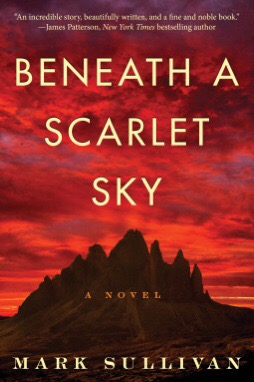
Q & A: Mark Sullivan author of Beneath a Scarlet Sky 


Goodreads|Amazon
Release date: May 1, 2017

Publisher: Lake Union 

Genre: Historical Fiction 

Blurb: 

Based on the true story of a forgotten hero during one of history’s darkest hours.


Pino Lella wants nothing to do with the war or the Nazis. He’s a normal Italian teenager—obsessed with music, food, and girls—but his days of innocence are numbered. When his family home in Milan is destroyed by Allied bombs, Pino joins an underground railroad helping Jews escape over the Alps, and falls for Anna, a beautiful widow six years his senior.


In an attempt to protect him, Pino’s parents force him to enlist as a German soldier—a move they think will keep him out of combat. But after Pino is injured, he is recruited at the tender age of eighteen to become the personal driver for Adolf Hitler’s left hand in Italy, General Hans Leyers, one of the Third Reich’s most mysterious and powerful commanders.


Now, with the opportunity to spy for the Allies inside the German High Command, Pino endures the horrors of the war and the Nazi occupation by fighting in secret, his courage bolstered by his love for Anna and for the life he dreams they will one day share.


Fans of All the Light We Cannot See, The Nightingale, and Unbroken will enjoy this riveting saga of history, suspense, and love. 


I was supposed to be sharing a review of this book today but unfortunately life got in the way when my whole family was struck with a stomach bug. Sigh. So instead, I have a Q & A with the author to share, enjoy! 

Q & A: 

Q: A self-described adventure nut, you’ve said you’re attracted to stories where characters are pushed to their limits and Pino Lella, the hero of BENEATH A SCARLET SKY, is definitely one of these characters. He risked his life guiding Jews across the Alps into neutral Switzerland, then became a spy inside the German High Command. The unlikeliest of heroes, he witnessed unspeakable atrocities that pushed him to his limits. What made him able to do this? What set him apart from so many other people at that time?

A: I am interested in heroes who are pushed to their limits, forced to go beyond themselves, and Pino is certainly one of them. After spending 11 years with this story, I came to believe that Pino was able to survive all these incredible situations because of his basic decency, his gratitude, and his love of life; because of his deep emotional intelligence; and due to his fundamental belief in the miracle of every moment, even the darkest ones, and in the promise of a better tomorrow, even when that promise was not warranted.

That philosophy enabled Pino to go beyond who he was, to be selfless in moments of crisis. He conquered the dangers in the winter Alps by focusing on the people he was saving, their emotions and longings. As a spy I think he believed overwhelmingly in the value of his mission, and he felt compelled to bear witness to the atrocities committed by Nazis in Italy. Pino was also extraordinarily young, and like any brash young man he rarely seemed to let doubt cloud his thinking, high in the Alps, or down in Milan in the presence of General Leyers. And, of course, Anna gave him strength.

Q: When you first talked to Pino in real life, he was reluctant to tell his story, believing he was more a coward than a hero. Yet, you convinced him to talk and ended up going to hear the story in Italy. Tell us about that.

A: The first time I called him from the States, he said he didn’t understand why I’d be interested in him. I told him that from what I knew of his story he was an uncommon hero. His voice changed and he told me he was more a coward than a hero. That only intrigued me more, and after several more calls he agreed to my coming to Italy to hear the story in person and in full.

When I first went to see him I stayed for three weeks. We talked for hours, which turned into days and weeks as I listened to him summon up the past. But by the time I got to Pino, more than six decades had passed. Memories change and fade with time. And a tortured mind will block out traumatic events, bury them in the subconscious, or shade them so the victim can look at them from a tremendous distance, and with little emotion.

He was evasive at times. He had a self-deprecating nature and often downplayed his role and the dangers he faced. I often had to press him to just describe what happened versus filtering it.

Then the deeper story began to surface. We laughed. We cried. We became friends. It ended up being one of the most emotional and rewarding experiences of my life.

Q: You have a background as an investigative journalist for both newspaper and magazines, why didn’t you tell this story as straight narrative non-fiction?

A: That was the original intent, but after years of trying to dig up the documented, fully-corroborated story, I threw up my hands. So many other characters had died before I heard about Pino Lella, and the Nazis had burned so many documents surrounding his story that even after ten years of research I had to make informed assumptions in the narrative.

Once I surrendered to that, I knew I was in the realm of historical fiction and writing a novel. I gave in to it and adjusted by switching obligations. The obligations of the non-fiction writer and the novelists are different. The former must hew to the documented facts and eye-witness accounts. The latter should portray the deeper, emotional truths. I went in that direction, and am glad I did.

Q: Tell us about your friendship and what Pino has meant to you.

A: January of 2006 was a terrible time for me. My brother had drunk himself to death the prior June. My mother had drunk herself into brain damage. I’d written a book no one liked and was involved in a lingering business dispute. That day I realized darkly that my insurance policies were more valuable than my life and potential in the future. During a snow storm, I seriously considered driving into a bridge abutment on an interstate freeway near my home, but I was saved by thoughts of my wife and sons. I was as shaken as I’ve ever been, and did indeed pray for a story.

Over the course of learning about Pino’s story, and as Pino opened up more and more during our conversations, I experienced his deep pain and marveled at his ability to go on after being so depressed and traumatized (he too had contemplated suicide). I had to comfort him repeatedly during the course of his long recounting, and I was moved again and again. During that time, and apart from the details of his war story, Pino taught me about life and his values and the many, many joys he’d been blessed with after handing over General Leyers to U.S. paratroopers on the last day of the war. It made me realize how much I’d put in jeopardy even thinking about suicide. I had a great, loving wife, and two remarkable sons. I had an amazing story to tell. I had a new and dear friend. I was more than lucky. Leaving Italy that first time, I felt blessed to be alive.

I went home a different person, grateful for every moment, no matter how flawed, and determined to honor and tell Pino’s story to as many people as possible. I just never thought it would take as long as it did.

Q: You spent almost nine years researching this story, hampered, in part, by a kind of collective amnesia concerning Italy and Italians during WWII, and the widespread burning of Nazi documents as the war ground to a close. The Nazi occupation of Italy and the underground railroad formed to save the Italian Jews have received little attention. Why have historians taken to calling Italy “The Forgotten Front”?

A: It did take me an awful a long time to dig up the details that surrounded Pino’s story. Over the years and between projects, I spent weeks in the Nazi War Archives in Berlin and Friedrichsburg, Germany, and in the U.S. Archives in Maryland. I went back to Italy two more times, and to Germany a second and third time. All along the way, I was hampered by the burning of Nazi documents in the last days of the war, especially by Organization Todt.

As mentioned, there also was and is a collective amnesia concerning Italy and Italians during WWII. It’s due in part to the savagery that so many Italians, like Pino Lella, witnessed in the last days of the conflict. Northern Italy descended into anarchy, and public revenge killings were widespread. It was so bad that many brave partisan fighters shut their mouths and never spoke of what they saw as the Nazis fled toward the Austrian border. One old partisan told me they were young and wanted to forget those terrible times. “No one talks about the war in Italy,” he said. “So no one remembers.”

I also think historians have tended to ignore Italy because General Eisenhower decided to pull multiple divisions out of Italy in the late spring of 1944 to bolster the fight for France. After liberating Rome in June of that year, the progress of the weakened Allied forces remaining in Italy ground to a virtual halt. And the focus of journalists, historians, and novelists largely turned to the drama of D-Day and its aftermath.

I think that worked in my favor to a certain extent. WWII Italy felt overlooked and unexamined, which made it even more exciting for me as I worked on the book. I realized that in addition to Pino’s story I could tell the broader history of the fight for what Churchill called “the soft underbelly of Europe.”

Q: Why didn’t Pino Lella talk about his experiences for more than 60 years? Is that unusual?

A: It’s not unusual. As I researched the book I found that heroes and tragic victims of the Italian battlefront were commonplace, and often intentionally unheralded or un-mourned. Pino and many, many others who survived the war in Italy blocked out their experiences. They witnessed men and women at their most noble and at their most savage. They rose to challenge after challenge, responded, and in victory and in tragedy promptly buried their memories and told no one.

In my experience, older Italians don’t talk freely about the war. To younger generations it’s as if it never happened. One old partisan fighter I interviewed told me that when he reluctantly went to a high school in Milan recently at the request of a history teacher to talk about the war, the students laughed at him. They said the things he’d seen could never have happened.

Q: You’ve said that global bestselling author James Patterson, your co-author on the Private series, “gave you a master class in commercial fiction.” What are some of the lessons he taught you, and how have they changed your writing life?

A: Mr. Patterson did give me a master class in commercial fiction. I’d written 10 novels before he asked me to collaborate with him, and I thought I knew what I was doing. I didn’t. Not really. For the most part I’d winged it in my earlier works of fiction, writing draft after draft before the real story appeared. Patterson believed in thinking out the plot up front, that novel writing is like house building—you have to be an architect first and design the layout and frame before you start thinking about anything else. Patterson also taught me that we were entertainers, not educators, and that our stories were driven by suspense and mystery but focused on emotion. He really hammered that into me, and I think my writing’s improved vastly because of it.

About the Author:

Mark Sullivan is the acclaimed author of eighteen novels, including the #1 New York Times bestselling Private series, which he writes with James Patterson. Mark has received numerous awards for his writing, including the WHSmith Fresh Talent Award, and his works have been named a New York Times Notable Book and a Los Angeles Times Best Book of the Year. He grew up in Medfield, Massachusetts, and graduated from Hamilton College with a BA in English before working as a volunteer in the Peace Corps in Niger, West Africa. Upon his return to the United States, he earned a graduate degree from the Medill School of Journalism at Northwestern University and began a career in investigative journalism. An avid skier and adventurer, he lives with his wife in Bozeman, Montana, where he remains grateful for the miracle of every moment.


It’s Monday! What Are You Reading? #imwayr

It’s Monday! What Are You Reading? is a weekly post to share what you recently finished reading, what you’re currently reading, and what you plan on reading this week. It’s hosted by Kathryn at Bookdate


What I Read Last Week: 


I loved The Promise of Provence it was such a fun read!


The Butlins Girls was a bit of a different read for me but I really enjoyed it.

Watching the Bodies was an awesome start to a new series.

The Fact of a Body was an extremely powerful read.

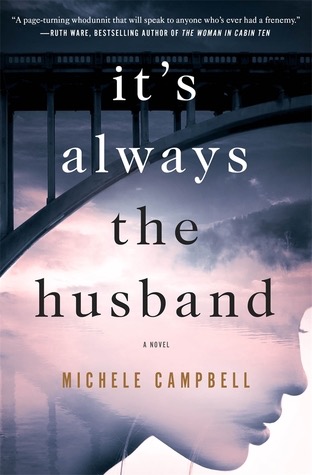
It’s Always the Husband was one I ended up really liking!

The Simplicity of Cider was just lovely. 
Currently Reading:


Up Next: 


My week was kind of crazy, my son was sick AGAIN and this time passed it to me. So my fun plans for Mother’s Day weekend went to hell and I was in bed all weekend. I didn’t even read much, I was that sick. I’m starting to feel better now so fingers crossed it stays that way!
How was your week? 

#CoverReveal Aphrodite’s Closet by Suzy Turner @suzy_turner

I’m helping reveal the cover for Aphrodite’s Closet today, read on for more information about the book.

Blurb: 

Agatha Trout didn’t even know she had a Great Aunt Petunia, so imagine her surprise when she finds Petunia left her a corner shop in her will. But it’s not just any old corner shop—it’s a corner shop that needs something unique, something the town of Frambleberry has never seen before. Influenced by her confident best friend, Coco, Agatha is soon convinced that there’s only one way to go: an adults-only sex shop.

While some of the townspeople are clutching their pearls in horror, others are open to the new experiences this shop offers. But not everyone in Frambleberry is convinced. Will the women soldier on in the face of violent threats or will their fears get the best of them—and their new venture—before it even gets off the ground? 

Amazon US|Amazon UK

And now onto the reveal…


I love how bright and fun this is! 

About the Author: 


Born in England and raised in Portugal, Suzy lives with her childhood sweetheart Michael, two crazy dogs and a cat.

Shortly after completing her studies, Suzy worked as a trainee journalist for a local newspaper. Her love of writing developed and a few years later she took the job of assistant editor for the region’s largest English language publisher before becoming editor of a monthly lifestyle magazine. Early in 2010 however, Suzy became a full time author. She has since written several books: Raven, December Moon, The Lost Soul (The Raven Saga), Daisy Madigan’s Paradise, The Ghost of Josiah Grimshaw, The Temporal Stone, Looking for Lucy Jo, We Stand Against Evil (The Morgan Sisters), Forever Fredless, And Then There Was You, Stormy Summer and her latest, Aphrodite’s Closet.

In 2015 she launched her popular 40+ lifestyle blog which continues to go from strength to strength, while just over a year later, she trained to become a yoga instructor. Suzy continues to write, blog and teach yoga in one of Portugal’s loveliest settings – the Algarve.

Blog|Goodreads|Facebook|Twitter

Blog Tour: Watching the Bodies by Graham Smith @GrahamSmith1972 @Bloodhoundbook


Goodreads|Amazon US|Amazon UK
Release date: April 18, 2017

Publisher: Bloodhound Books 

Genre: Mystery/Thriller 

Blurb: 

When Jake Boulder is asked by his PI friend to help investigate the vicious murder of Kira Niemeyer, he soon finds himself tracking a serial killer who selects his next victim in a most unusual manner.


As the body count rises, Boulder has to work with the police to identify the heinous killer before more lives are taken. What ensues is a twisted game of cat and mouse, that only Boulder or the Watcher can survive. But who will it be? 

I’m so pleased to be closing down the North American leg of the Watching the Bodies tour! 


Review: 

I’ve seen Smith’s work highly praised by my U.K. blogger buddies many times in the past, so when I heard he was releasing the first book in a new series set in the US, I knew I had to get involved! Jake Boulder is one hell of a lead character and he has such a strong, distinct voice along with a unique viewpoint that really intrigues me. 

Jake isn’t a detective or a PI nor does he have any real connection to law enforcement, he’s a bouncer with a temper that he tries to control, try being the key word. His best friend is a PI and asks for his help when he’s hired by the father of a young woman who was murdered as he has little faith in the local police, which is totally justified. I always like a fresh POV in any crime novel and this provided that totally. It kind of reminded me of Owen Mullen’s Charlie Cameron series in a way. They both have an easy writing style that absorbs me, yet they still manage to create tension and pulse pounding moments. 

The case itself was so interesting, a serial killer is escalating and the bodies are piling up way faster than the incompetent detectives in town can handle. His methods and motivations are so complex, I wish I could say more, but half the fun of this book was discovering all the plot intricacies. Smith inserts chapters from the killers perspective and those never fail to chill me to the bone. I’m very impressed by the direction this series seems to be heading and I can’t wait for book two!

Overall rating: 4/5

About the Author: 


Graham Smith is married with a young son. A time served joiner he has built bridges, houses, dug drains and slated roofs to make ends meet. Since Christmas 2000 he has been manager of a busy hotel and wedding venue near Gretna Green, Scotland. 


An avid fan of crime fiction since being given one of Enid Blyton’s Famous Five books at the age of eight, he has also been a regular reviewer and interviewer for the well-respected website Crimesquad.com since 2009


He is the author of four books featuring DI Harry Evans and the Cumbrian Major Crimes Team and one book, WATCHING THE BODIES in a new series featuring Utah doorman, Jake Boulder.

Facebook|Website|Twitter|Amazon

Blog Tour: Rocks Beat Paper by Mike Knowles @Mike_Knowles @ecwpress


Goodreads|Amazon
Release date: May 9, 2017

Blurb: 

“Merciless but honest about being monstrous, Wilson is worthy to stand next to Loren Estleman’s Peter Macklin and Donald Westlake’s Parker.” — Publishers Weekly


A phone call brought Wilson and nine other men to a job in New York. At first, he couldn’t see a way to make the heist work, but the score — millions of dollars in diamonds — kept him looking. Wilson came up with a plan he knew would work . . . until the inside man got killed and took the job with him.


With no way inside, the crew walks away without the diamonds. Alone, Wilson is free to execute the job his way. Wilson sets a con in motion that should run as predictably as a trail of dominoes — except the con doesn’t rely on inanimate tiles, it relies on people.


Wilson pushes all of the pieces across the board only to find out that there are other players making their own moves against him. Everyone is playing to win and no one is willing to walk away because the job is about more than money, the job is about diamonds. And in this game, rocks beat paper every time.

Welcome to my stop on the blog tour for Rocks Beat Paper! I have an exclusive excerpt to share with you, make sure you check out Clues and Reviews who shared the previous section and also Do Some Damage who will have the next excerpt on May 11. 


Excerpt:  

From Chapter 1

I circled the table and took a seat that allowed me to keep my back to the wall.

“You’re late,” Miles said. 

I looked over the bowls of chips that surrounded a warm shrimp ring. I had never been to a meeting with a shrimp ring before. “A lot of people here,” I said.

. . .[Miles] smirked and then his face lost all trace of expression. “You have a problem with the numbers?”

I nodded. “Every man you add to a job adds more than just a pair of hands. It adds baggage. All the personalities and ideas create variables, layers of unexpected consequences that will need to be dealt with. Every job has something, and you deal with them as they come. Most times you can because an isolated problem isn’t usually enough to sink a job. But every number you add expands the potential fuckups and makes them exponentially harder to solve because you have to work out a solution that makes the whole group happy. I see eight men walk through a door and I get a headache just thinking about the homework.”

“What the fuck are you talking about?”

The pool player wasn’t playing pool anymore. He was standing beside the table with the cue in two hands. Seeing the man bent over the table didn’t give me a real impression of his size. I had pegged him as big. Standing at full height suddenly made the word feel weak — the man was huge. His white T-shirt hugged his barrel-shaped torso; the logo on the old shirt had faded into an indecipherable smear that matched the grey streaks running through his tangled hair. His heavy hands wrung the cue, and the motion revealed prison ink on the inside of his forearms. The tattoo was faded and poorly done, likely from his first fall a long way back. Based on his eagerness to fight in order to cement his position as the alpha in the room, I guessed he did more than one stretch.

I nodded my head towards Miles while keeping my eyes on the man holding the cue. “I’m talking to him,” I said.

“Your talking is fucking up my game.”

. . .Miles opened his mouth to say something and then gave up on it. He turned his head towards me. “You said you watched eight men walk through the door. I just caught that. You weren’t late, you were just on the fence.”

“Not so much on the fence now that I see the workload,” I said.

“Too much homework?”

I nodded. “A nine-man job is worse than calculus.”


Find the previous excerpt on Clues & Reviews.

Find the next excerpt on Do Some Damage on May 10.


Excerpt adapted from Rocks Beat Paper by Mike Knowles. © 2017 by Mike Knowles. All rights reserved. Published by ECW Press Ltd. http://www.ecwpress.com

About the Author: 


Mike Knowles lives in Hamilton with his wife, children, and dog. His Wilson mystery In Plain Sight was shortlisted for the Arthur Ellis Award for best crime novel.


Blog Tour: Disenchanted by Heide Goody and Iain Grant 


Goodreads|Amazon US|Amazon UK
Release date: May 5, 2017

Publisher: Pigeon Park Press

Genre: Chick Lit

Blurb: 

Ella Hannaford has a small business to run, an overworked father to look after and a future stepmother who wants a perfect wedding. 


Can she avoid a girly night out with her clueless stepsister? Can she side-step lovesick suitors at every turn? Not if it’s up to that team of foul-mouthed dwarfs who want to forcibly drag her into her happily ever after.


Gingerbread cottages, dodgy European gangsters, gun-toting grannies, wisecracking wolves, stubborn fairy godmothers, ogres, beanstalks and flying carpets abound in a tale about what happens when you refuse to accept your Happy Ending. 

Welcome to my stop on the blog tour for Disenchanted. I have a funny guest post to share with you today.


Heide and Iain’s latest novel, Disenchanted, is out this month. The fairy tale fantasy comedy was written with no small assistance from Dr Epiphany Alexander of Sheffield University’s Department for Folklore and Oral History. As an insight into the research material used to create Disenchanted, we present another of Dr Alexander’s letters to the author duo.


My Dear Friends,


Apologies for the state of this letter and the quality of my handwriting. I am having to write it in peculiar circumstances.


I have surprising news. I am currently in Arizona! This is, as they say, a turn up for the books. Quite apt as I have literally turned up for the book, namely Lang’s Black Fairy Book, his missing thirteenth volume of fairy tales.


When I last wrote to you, I had just heard that the book was perhaps with the domunculus reliquary in Cleveland, Ohio. A few phone calls later and I was speaking to a Professor Raposa of the University of Arizona where the reliquary is on loan. Professor Raposa, I am embarrassed to say, is a fan of my work and both an invitation to visit and plane tickets were soon sent my way! I was naturally thrilled but Pak Choi, my faithful companion, was less pleased. He had heard rumours about the questioning some people are put through at US border control and was worried that the officials might give one of the Fair Folk a tough time. I said he should simply not say anything to annoy them and just keep them happy.


To distract him from worry on the flight, I told him my favourite Arizonan story. It concerns Grey Fox, hero of the Yuman-speaking Native Americans. Giants had come out of the east and from their camp atop a mesa attacked the people of the land, eating those that they could catch. The king rode out to meet the giants and he too was eaten. After that, no one wanted to be king. Grey Fox, who was a reluctant hero at best, knew he had to face the giants. As he walked towards the mesa, he met a horned toad, who offered his help in defeating the giants. He gave Grey Fox his ‘horned helmet’, his ‘horny breastplate’ and his ‘scaly wings’ and told him that he should fight the giants so that the giants had their backs to a cliff edge. Grey Fox went to the mesa and, using the toad’s wings, flew up to meet the giants. They threw spears at him but they broke against his breastplate. They fired arrows at him but they bounced off his helmet. The giants, fearing that Grey Fox was a spirit, dared not take their eyes off him. As the toad had instructed, Grey Fox fought them so they had their backs to the cliff edge so when he leapt at them, they stepped back and fell down to their doom. The last of them to fall reached out and ripped the wings from Grey Fox’s back. Grey Fox returned to the horned toad and gave back the helmet and breastplate. But, seeing that his beautiful wings had been destroyed, the toad was overcome with sadness and anger which is why, to this day, the wingless horned toad cries bitter tears of blood whenever the fox comes near.


The man at the immigration desk had clearly not seen a passport from the Fair Lands before. They are rare after all and composed primarily of pressed leaves and petals. I suspect Pak Choi might have taken my earlier words too literally. He whispered certain words to the man and the man started laughing. He did not stop laughing, even when they had wrestled him from the booth and taken him away on an ambulance stretcher. We hotfooted it out of the airport as quickly as possible.


Professor Raposa was a delightful host who put me up in his Tucson home. Of late, all the men I meet seem to either be suspiciously monobrowed or have some sort of romantic interest in me. It appeared that Professor Raposa was one of the latter. At dinner, with an honesty and charm that British men simply don’t have, Professor Raposa explained that he had first seen me delivering a speech at a symposium in Illinois some years earlier and had ‘taken a shine’ to me. I recall delivering a paper at the event entitled “People in Glass Slippers shouldn’t own Thrones: Why Cinderella would have been a Rubbish Queen” but I had no recollection of meeting the professor.


I rebuffed the professor’s gentle advances and we spent a perfectly pleasant evening over a bowl of chili, a plate of something called cheese crisp and a glass of Sonoita Malvasia, an American wine that was far more pleasant than certain European wine-snobs of my acquaintance might have me believe. The following day, we went to the Arizona State Museum in the grounds of the university and to the domunculus I had come all this way to see.


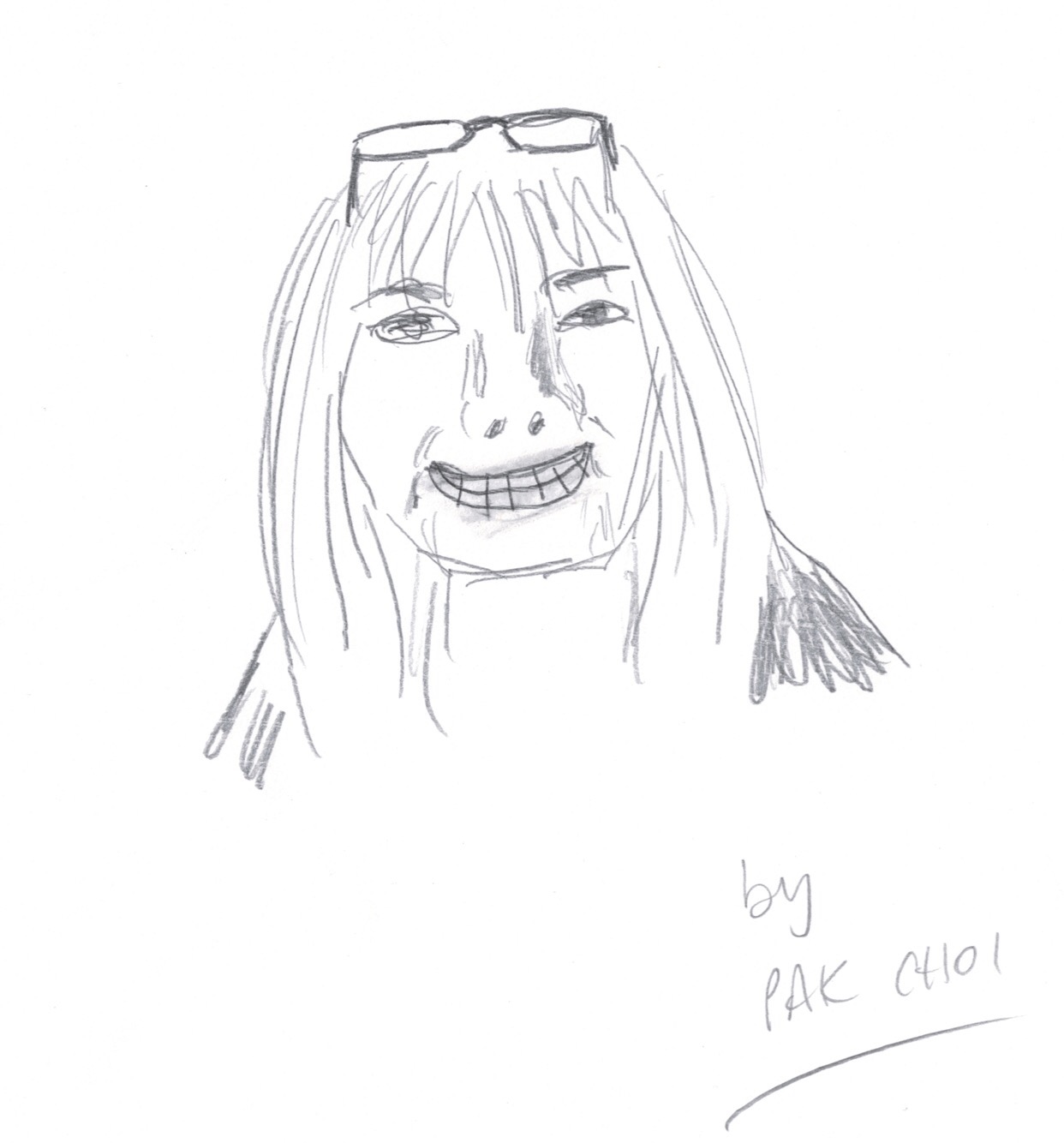
However, I was distracted by the sight of the infamous Silverbell Road Crosses that the museum also has on display. The crudely cast lead crosses are perhaps evidence of a mythical colony of religious exiles who fled from Rome over twelve hundred years ago and settled in Arizona centuries before the arrival of the Spanish conquistadors. The badly-formed Latin inscriptions and the carved imagery (including a dinosaur, no less!) offer hints of a marvellous story of great adventure, remarkable encounters in the Arizona desert and possibly even dinosaurs. Or, they all form part of an elaborate hoax, created for unknown reasons by a local Mexican sculptor. If only I had the time to study them further and draw my own conclusions! Pak Choi’s own conclusions are evidenced in this delightful drawing he has rendered.


Professor Raposa took me to a gallery attended by two young men and there he presented to me, wrapped in a protective sheet, the Uttoxeter Casket. The reliquary was both smaller and more intricately carved than I had imagined. The boxwood carvings show various scenes from the life of Christ, including the nativity and the crucifixion. I told Professor Raposa that it was beautiful but, in all honest truth, I wanted to look within. Professor Raposa obliged and lifted the lid.


Oh, dear friends, did I expect to see Lang’s missing book of fairy tales just sitting there? Did I foolishly think that it had remained hidden for decades because no one had thought to look inside the box? The answer, sadly, is yes. But, naturally, the reliquary box was empty. Well, almost.


At the bottom of the box was a black and white photograph. I inspected it and saw that it was a photograph of a section of medieval manuscript, featuring an image of a fair queen upon her throne.


Professor Raposa was keen for my interpretation of the photograph which had arrived with the box. I was not quick to come to any judgement. Jumping to hasty conclusions will have people believing in cowboys riding dinosaurs and wotnot. Professor Raposa became unaccountably impatient and then angry and he demanded that I tell him where the Black Fairy Book was. He made a passing remark about ‘the cheese-dangling witch!’ but I was suddenly and acutely distracted by the guns that the gallery attendants now pointed at me. I was struck by two almost instantaneous thoughts: one was that the two gallery attendants had rather thick eyebrows, the other was that it seemed something of a cliché for my current adventure to only feature firearms when I travelled to the United States. Oh well, such is life.
 

Unable to answer Professor Raposa’s demands for the location of the Black Fairy Book, even at gunpoint, I soon found myself in an unusual position. In short, I am currently writing this from the confines of the boot of what I understand to be a Lincoln Continental (you might have been curious as to why I have been forced to write this letter on end papers torn from your latest novel. It is no reflection of the regard in which I hold your book; it was simply the only paper to hand). It’s not the ideal space in which to write a missive but it could be worse. I will say this for our American friends, they do build cars with plenty of trunk space. I am not sure where the malicious Professor Raposa and his accomplices are taking me but I hope to post this letter to you as soon as I am let out.  


I am deeply conscious that I said I would be at your book event in four days’ time. Be assured I very much intend to be there and to have read your book in full by that time. I am sure all this nasty business will be wrapped up long before then.


Yours,


Dr E. Alexander


Dr Epiphany Alexander’s latest book, “High Ho, High Ho: Drug Use and Prostitution in Fairy Tales” is currently available from Sheffield Academic Press.

Heide Goody and Iain Grant’s novel, Disenchanted, is available now from Amazon.