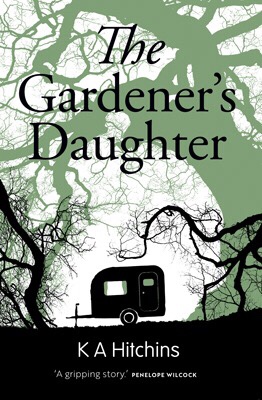
#BlogTour The Gardner’s Daughter by Kathryn Hitchins @KathrynHitchins

Amazon

Release date: March 15, 2018

Blurb:

Motherless nineteen-year-old Ava has always believed brilliant botanist Theo Gage to be her father. But when a chance discovery reveals she is not his daughter, her world falls apart. Determined to discover her true identity, Ava impetuously runs away and enlists the help of inexperienced private detective, Zavier Marshall. Pursued by shadowy figures, she takes on a new name and follows in her dead mother’s footsteps to work at the mysterious Fun World Holiday Camp. Penniless and cut-off from everything she’s ever known, and trapped in a deadly game of cat and mouse with a ruthless criminal gang, will Ava survive in a world where she s more valuable dead than alive? Will she discover the shocking truth behind her mother’s death? And will she find her real father before it s too late?

I’m delighted to have on my blog today, K A Hitchins, author of The Girl at the End of the Road and The Key of All Unknown, both short-listed for Woman Alive magazine’s Reader Choice Award 2017. I asked her about the inspiration of her latest novel, The Gardener’s Daughter, released on 15 March 2018.

“It was only when I lost my father and began speaking to friends about what he had meant to me that I realised how many people don’t have a good relationship with their dads, or even had any real contact with them during their childhoods.  I decided I wanted to write a novel about how much our identity is tied up with knowing where we’ve come from.

“A friend had told me of a girl who’d discovered in her teens that she was the result of an extra-marital affair. The other man had backed off when he realised his lover was pregnant with his child. The marriage survived the affair and – after seeing the ultrasound scan – the husband decided to commit himself to raising the baby with his wife. He adopted her officially when she was born, to prevent the biological father coming back on the scene in later years. The girl had a normal and happy childhood, but in her teens her parents told her that her Dad was not her biological father.”

That must have been quite a shock. How did she react?

She was completely devastated: her older sister was her half-sister; her beloved paternal grandparents were not relatives at all. There was a short spell of rebellion before, thankfully, she managed to work through these issues.

So this was the inspiration for your third novel?

Yes. This story fascinated me. I began to realise that many of the positive things in my life were a direct result of the happy and secure upbringing my parents had given me, rather than any intrinsic goodness or talent in me. I decided I wanted to write about identity and how this is affected by the fathers we have – good fathers, bad fathers and absent fathers. My motherless nineteen-year-old heroine, Ava Gage, accidentally discovers she’s adopted when trying to do a good turn for her Godfather. In a fit of anger, she impetuously runs away in search of her biological identity. Penniless and cut-off from everything she’s ever known, and trapped in a deadly game of cat and mouse with a ruthless criminal gang, she unearths the shocking truth behind her mother’s death and discovers who her real father is – with a sprinkling of romance and humour along the way!

‘The Gardener’s Daughter’ is a Young Adult thriller. Have you written YA before?

This was my first attempt at YA, but as I have two teenagers at home I thought I would try and write something that would appeal to them. My first novel, The Girl at the End of the Road, is a mystery/romance about a man who loses everything in the credit crunch and goes back home to live with his parents in the Suffolk village of his birth. He bumps into a mysterious woman from his past and discovers that things are not always what they seem, people aren’t always who they appear to be, and a ‘successful life’ depends very much on your perspective.

My second novel, The Key of All Unknown, is the story of brilliant scientific researcher who wakes up in hospital unable to speak or move and with no recollection of what happened to her. Determined to find answers and prove to her family and doctors that she’s not in a persistent vegetative state, she searches for clues in the conversations she overhears and in the fractured memories that haunt her. Slowly realising that nearly everyone she loves or works with has a motive for wanting her dead, her only hope of survival is to discover the truth and unlock the key of all unknown.

I have to admit, that writing YA was more difficult than I envisaged. Having two novels under my belt I thought it would be a breeze to write something for a younger audience but in fact the opposite is true. It isn’t a question of simplifying the writing. Teenagers don’t like to be talked down to, and they won’t waste their time reading something unless they’re gripped from the word go and the storyline relates to the issues in their life.  After all, YA authors aren’t just competing with each other for teenagers’ attention, they’re competing with computer games, YouTube, and social media. Thankfully, the initial pre-release reviews have all been five star, so I must have done something right!

Author Bio

K A Hitchins studied English, Religious Studies and Philosophy at Lancaster University and later obtained a Masters in Postmodern Literatures in English from Birkbeck College, London University. Her debut novel, The Girl at the End of the Road, was published by Instant Apostle in March 2016, followed by The Key of All Unknown in October 2016. Both books were short-listed for Woman Alive magazine’s Readers’ Choice Award 2017, with The Key of All Unknown reaching the final three. Her third novel The Gardener’s Daughter was published on 15 March 2018. She is married with two children and lives in Hertfordshire.

Website Link www.kahitchins.co.uk

Twitter @KathrynHitchins

Facebook Kathryn Hitchins

https://www.facebook.com/profile.php?id=100015464465799

K A Hitchins, Author page

https://www.facebook.com/KathrynHitchins/

Instagram kathryn_hitchins

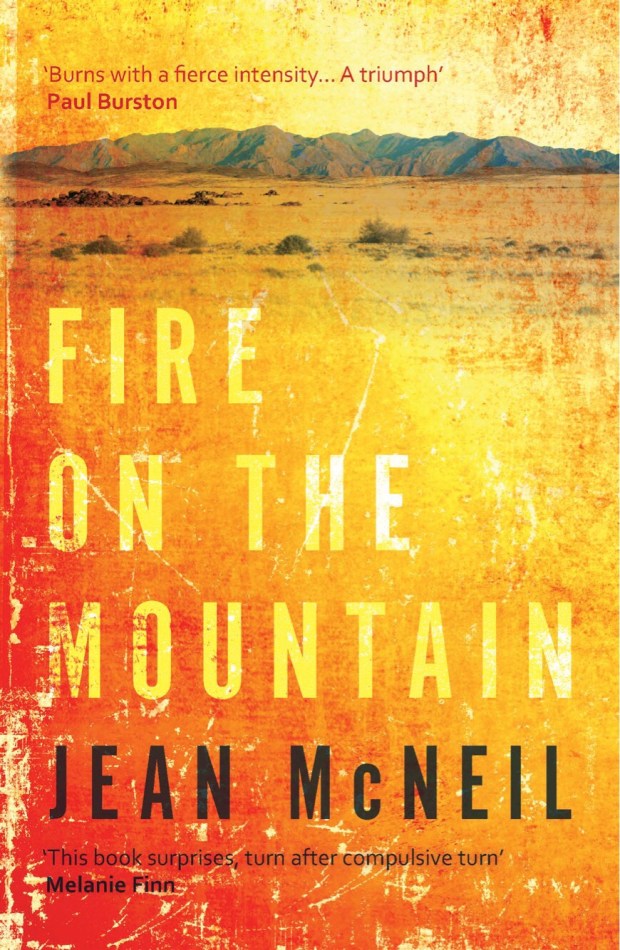
#BlogTour Fire on the Mountain by Jean McNeil @jeanmcneilwrite @legend_press

Goodreads|Amazon

Release date: February 15, 2018

Publisher: Legend Press

Genre:

Blurb:

When NGO worker Nick drops unexpectedly into the lives of Pieter and Sara Lisson, he feels he has found the parents he never had. Nick is enraptured by their lives of splendour and acclaim as much as the stirring setting of the African city where they live, but he soon senses a secret at the heart of his new family. Nick then meets Riaan, the Lissons’ son, and so begins an intense connection that threatens to erupt into a relationship neither had ever considered. In the shadow of the Brandberg, the glowing mountain that stands at the heart of the desert, Nick will discover that his passion for Riaan is not the only fire which threatens his newfound home.

I’m so pleased to be the stop on the blog tour for Fire on the Mountain today! I have an extract to share with you all.

Extract:

I

‘Nice part of town,’ the taxi driver said, as soon as I gave him the address. I couldn’t read the tone in his voice – envy, rue, contempt. Perhaps all three.

We began the long ascent of the mountain. I craned my neck to look at the city beneath us. I could see where I had come from now, the wide-mouthed harbour anked by half- nished highways. This was where I’d been marooned for days. Some of the overhead yways simply stopped abruptly halfway along the roadway, like the highest platform in a diving pool. From up here the gigantic Chinese container ships and oil rigs looked so much smaller. I allowed my eye to skate over the ship, but even so my heart lurched as its green hull ashed at me in the mid-day sun.

We kept ascending, so quickly my ears popped. I could smell jasmine and frangipani through the car windows. We wound through tree-darkened avenues. The houses expanded with each metre climbed until they were full- blown palaces. Finally the taxi delivered me to a sandstone- coloured structure perched on the side of the mountain. It looked like a house you might nd in a Dutch village, adapted for life in the subtropics.

‘I didn’t know it was possible to live this far up,’ I said to the taxi driver.

‘It is if you’ve got enough money.’

I buzzed the gate and spoke to a woman’s voice – Sara, I supposed. The gate slid open and we glided up the drive, so steep it felt like being in a funicular. Stout plants clambered over the terraced levels on either side of the driveway; they were spiky and bulbous at the same time, with avid, rubbery leaves.

A blond woman with jade green eyes descended the steps to the house. She seemed to oat; her sense of ownership was that complete. She was long-legged, dressed in white trousers and a sand-coloured blouse.

‘Pieter is out running,’ Sara said, as she gave me her hand. ‘He’s training for the marathon.’

‘Oh.’ I nearly said, but I thought he was a writer. I’d never pictured a writer running a marathon.

‘Come in, let me get you some coffee.’

I dropped my bags. I saw her eye glance at them nervously, as if I had brought dogs and not luggage. She motioned for me to sit in the living room.

When I entered the room I couldn’t help but stop and stand stock-still. My jaw may even have fallen open.

‘Quite the view, isn’t it?’ Her voice, the cool neutrality of it, told me that many a guest had been similarly stopped in their tracks.

The wide arc of the bay was stretched out before us. In the distance was the low, whale-like back of Garzia Island, which even with my slim knowledge of the city I knew was a former penal colony from when the Portuguese were still loitering on this promontory of the planet, hoping for lucre.

To the right of Garzia Island were blonde hills which gleamed like ax in the sun. The mountain with its strenuous attened peak lled an entire window. The living room was glass on two sides. The thought entered and exited my mind, too eeting to matter. People in glass houses.

Sara went to the kitchen. Later she would tell me she asked me to sit down three times that morning but as soon as I sat I stood up again.

I could not tear my eyes away from the mountain. The jagged peak that marked one undulation of its range soared into the sky, piercing a hole in it. Next to the house a date palm towered, its trunk of scaled chocolate bark perfectly offsetting the dark shale of the mountain. Straight ahead was the ocean; off to one side was the harbour, half-hidden behind a headland. My eye rested on it again for a second. The ship, patiently waiting alongside the quay.

I reminded myself it was Saturday. Tomorrow the ship will leave.

‘So,’ Sara began, when she nally got me off my feet. ‘How long are you here for?’

‘I’m not sure. I – I’ve just had a change of plan.’

She nodded, calmly. If she had been English, alarm bells would already have been sounding in her mind: How long will I be stuck with this person? Why does he have so much baggage? Why has a random contact of our niece ended up on our doorstep?

‘Well this is as good a place as any to have your plans change.’ She smiled easily, warmly, I thought. ‘You can certainly stay here as long as you like. We’ve got no one coming until April.’

It was mid-December. ‘It shouldn’t be that long, at least I hope not,’ I said. ‘I’ll just make some arrangements for my trip home, and then let you know.’

‘That’s absolutely ne. It’s a pleasure to have a friend of Ruth’s here.’ Her delivery was unruf ed, awless.

I accepted Sara’s invitation to join her on a walk on the mountain behind the house. She met me at the bottom of the steps. She’d changed into trim shorts. She must have been in her late fties or early sixties but her legs were perfect; there was nothing of the tell-tale bulge of skin at the knees, or those black spidering veins. I stared long enough for her to take my amazement as a compliment, perhaps, because she gave a sudden smile.

We started down the road, which soon ended in a paved cul-de-sac. From it a path led into a sparse forest. It was dry as tinder in areas, the ground parched and weedy. All

the trees and owers we passed were unfamiliar – thick, bulbous owers. They looked water-hungry but somehow thrived in the seasonally dry climate.

We came to a ssure in the mountain. The sound of water cascading came to meet us. The trees parted to reveal a narrow stream.

‘Slaves would come here to wash clothes,’ Sara said. Her voice was complex – rich, melodic, but with a tinge of darkness to it, or perhaps this saturnine note was code for her disapproval of the city’s history.

I looked up, trying to nd the mountain’s summit among clouds. I could feel it, somehow, that this shaded bower had once been a place of hardship. Alongside the river were stone steps, knee-worn through hundreds of years of prostrations, and beside them, at, table-like washing rocks. I could see the interlacing strata of grey mudstone and sandstone, its outer shield dark shale. Then layers of granite: feldspar, quartz, black mica, all glittering in the strange bright light.

Sara smiled. ‘You seem trans xed.’

‘By the mountain? I guess so. I used to be a geologist.’ ‘But now you work for a humanitarian relief organisation.

How does that t in?’

I was used to this comment. I can’t work you out, people

– colleagues, my line manager, strangers met on planes, would say.

‘It’s complicated.’ I offered an apologetic smile.

‘Everything’s complicated.’ Her laugh was itself complex, rueful, rise-above-it-all. ‘Pieter should be back about lunch- time. He’ll need to take a shower and wind down.’

‘Does he often train for marathons?’

‘Oh yes, and cycle races, triathlons, endurance contests. Everyone does that here.’

By everyone she couldn’t have meant the squatter camps I’d seen on the way in from the airport, their faded tutti- frutti shacks, people inside broiled alive by tin roofs in the

summer and congealed in winter. They were enrolled in a different endurance contest.

We arrived back at the house. Sara showed me to their guest at, which was self-contained but attached to the main house through an internal door. She told me they had designed and built the at themselves, and that she used to see her clients there while Pieter worked in his basement of ce.

By then the sun parried the swift ocean clouds for position and shone through, the light bright, carrying within it the promise of a humid heat, should the clouds dissolve. I stood in the light for a minute as Sara undid the three locks and de-activated the house alarm. I registered what was about to happen to me. For a moment, I thought I would be alright. But I could only watch helplessly as the air gathered itself into blackberries, then went dark.

‘We thought we’d lost you there.’

up.It felt like I was lying on concrete. I realised I was. I sat

I opened my eyes into the face of a blond-haired man. He was crouching on one knee. His ngers were wrapped around my wrist. He might be a doctor. There was a clinical glint in his gaze. His voice was familiar, somehow, although I’d never seen him before.

‘Nothing to be sorry about. We’d like you to lie down inside, though. You might nd that more comfortable.’

‘Hey, take it easy.’

‘I’m so sorry.’

‘I haven’t been sleeping well,’ I said, as the man helped me to my feet. ‘I haven’t been eating either.’

‘Not sleeping and not eating, hey?’ His tone was avuncular, but suspicious.

‘I’ve been under a lot of stress – at home.’

‘That’s ne, Nick, don’t worry,’ Sara’s voice came from somewhere behind me. ‘We just want to make sure you’re alright. You fainted stone dead, there.’

I realised the man was Pieter. ‘We’re going to put you in bed and then we’ll call Marina, our doctor.’

‘No!’ I nearly shouted. ‘I mean, I don’t want to put you to any trouble. Please don’t make a fuss. It’s just dehydration. I’ll take a couple of salt sachets. I’m not concussed. I’ll be ne.’

They looked at me in tandem, a double-headed puppet of concern, the same kind-but-wary expressions on their tanned, shining faces. They don’t know you from Adam, I told myself. You have to reassure them.

‘I’ve had some dif cult decisions to make recently, and it’s left me very strung out. But I’m ne, now.’

Sara gave me the sturdy, professional look psychiatrists likely turn on liars.

‘Okay, Nick. But take those salts and get some sleep. We’ll check on you in a few hours.’

When I woke it was late afternoon. My bedroom had a patio door. I opened it and was confronted with a garden, two chairs, and the same panoramic view of the harbour and mountain, although the majestic sweep I’d admired in the living room was curtailed by the curve of the house.

The light lay in gold ribbons on the anks of the mountain. A heat haze had settled over the harbour, blurring the outlines of supertankers. My eye scurried over the quay where the ship was moored but not before I’d seen that it was still there.

I resolved to tell Pieter and Sara the truth, of my fainting spell, why I was here, why I had no idea how long I would stay. They had been kind to me, they deserved to know.

Pieter appeared from around a corner. He wore a crisp white shirt tucked into jeans and a leather belt. He was barefoot and his hair was plastered to his head from his shower. He was very thin – one of those men who are naturally so. You could see the architecture of the bones and muscles in his face.

‘How are you feeling?’ ‘Much better.’

‘You haven’t got a headache?’

‘No, nothing like that. No concussion.’

‘That’s good. I had one once. I came off my bike, just up

there, on the mountain.’

This was the moment in which I would say, Look, I’ve

just made this crazy decision I don’t understand. I’m not supposed to be here, but I’ve got nowhere to go.

We turned our faces in tandem, like sun owers, toward the setting sun.

‘This time of year the sun rises in the sea and sets behind the mountain – we get light all day,’ Pieter said. ‘The people who live on the other side are spared the wind but they get far less light.’

My confession unravelled itself, or it abandoned me, or I let it be carried away by the moment. I had so little experience with secrets, guilty or otherwise. I’d never liked them; a secret was a dripping overheated greenhouse.

‘I’ve never been anywhere the wind is so erce in the summer,’ I said.

‘Not like that in England, is it?’

A dog appeared, a mongrel, or a cross, a bullish dog with a bruiser’s face.

‘Hello, Lucy.’ He turned to me and grinned. ‘The name doesn’t really t the face, does it. But she’s a sweetheart. Arr! Grrr!’ He planted his legs wide apart, a position of mock threat. Lucy went wild with pleasure, charging away, thrilled, then turning on a dime to come back to face the monster.

Behind Pieter I saw a bright light that seemed to zing from inside him in a perfect giant Z, a ash of miniature lightning.

‘What was that?’

‘Transformer.’ Pieter pointed to a sizzling cylinder nestling in a telegraph pole halfway down the road. ‘They often explode – too much load on the system. Don’t be alarmed if the electricity cuts out. We have candles.’

He turned back to the dog, who rushed at him, growling, purple gums bared. For a moment I thought she would bite. But she stuck her head between his calves and squealed with delight.

‘We have rolling electricity cuts, this time of year,’ he went on. ‘They announce them in the paper, supposedly, but it can cut out any time.’

‘Are there shortages?’

‘Ah, if only it were that easy. No, it’s corruption, mis- management. A new government is about to be elected, although we’re in a one-party state, effectively. It makes you appreciate how useful it is to have two political parties contesting each other, however bad either of them will be. At least it bestows symmetry if not a chance for historical dialectic.’

His speech reminded me of the policy analysts in our of ce in London. I wasn’t used to athletic, vital men who were also intellectuals, if that’s what Pieter was. I lived in a country where a certain kind of man got things done, and a certain kind of man thought about things. Perhaps here they could be one and the same.

‘It’s not only power, but other infrastructure.’ He pointed into the harbour. Along its perimeter, an eight-lane highway conveyed sun-glinted cars into the interior like platelets rushing down an artery. Pieter told me that the diving board freeways I’d seen on my way in had been built in a spasm of economic optimism, which had just expired.

‘You are English, aren’t you?’ he peered at me.

‘The way you say it, it’s not a good thing to be.’

‘Well, it might not be, you know. The English don’t

have a good reputation in this country. They quashed the independence movement, then established a colonial system that set the country back a hundred years.’

‘I am,’ I conceded. ‘But I don’t feel very English. I was brought up all over the place – South America, Canada, the Caribbean.’

‘Was your father a diplomat?’

‘My mother, actually.’

‘Ah,’ Pieter gave a thin smile. ‘I fell into that trap didn’t I? Sorry. You know, you don’t look English either. You’re too dark. In fact you don’t look anything.’ He smiled. If I had known him better then I would have said I always felt like someone drawn in pencil. A child’s drawing of a man, maybe. Anyone could take an eraser and rub me out.

‘I’m impressed you still have the energy to play with the dog,’ I said. ‘After all that running.’

Sara answered for him. She emerged from the patio into the full sun, her hair gleaming. ‘Pieter’s got amazing energy. You’ll see.’

I turned to face Sara. ‘It must be so gruelling.’

‘Yes, it is sometimes.’ Sara smiled.

‘No, I didn’t mean… I meant the training.’

Sara only laughed. ‘Get some sleep, Nick. And don’t

forget to rehydrate.’

There was something jarring in her voice, not dismissive

but rather ironic, as if they still did not believe my story. I turned to look into her eyes. The note in her gaze was evaluative – masculine, I would have said until recently, but I realise now that this is a shorthand for something intangible I associate with men: a streamlining of judgement, an absence of empathy, or perhaps better said, a professionalisation of it. Or maybe just something withheld.

I went to bed in their granny at. Despite my fatigue I could not get to sleep for a long time. I listened to the night wind, which sliced sideways along the garden. Through a ssure in the curtain I saw the lights of the city stretched around the bay, a semi-circle of distant ickering candles.

I found myself thinking of Sara, of her contained quality. Her jade eyes and heart-shaped face. She was a professional, well-to-do, elegant woman who drove a Mercedes, but I had a sense this version of her was a decoy.

As I fell asleep that night in my new bed I thought, these are the strangest days I have lived in years, possibly in my

whole life. Here I am, in the house lled with people I don’t know, in a city where I never expected to spend more than a few days, telling lies, or no, that’s not quite right: not telling the truth. Why then do I feel such serenity, as if I have come home?
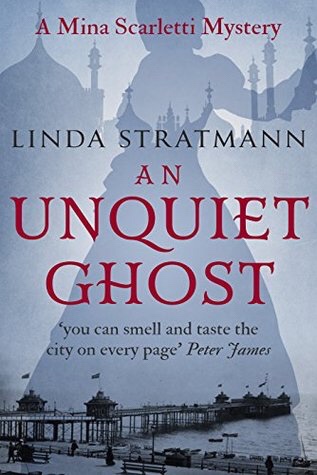
#BlogTour An Unquiet Ghost by Linda Stratmann @SapereBooks @LindaStratmann

Goodreads|Amazon

Release date: March 1, 2018

Publisher: Sapere

Genre: Historical Fiction, Mystery

Blurb:

Mina Scarletti returns in her most thrilling mystery yet! Perfect for fans of Sherlock Holmes, Agatha Christie and Antonia Hodgson…

A family is being torn apart by rumours of a murderer in their midst. Can Mina solve the mystery and lay the ghosts to rest?

Brighton, 1871 .

Mina Scarletti is becoming well known for unmasking fraudulent psychics. So it is no surprise to her when a young couple write to her seeking her advice.

George Fernwood and Mary Clifton, betrothed distant cousins, have a family secret that is preventing them from getting married. Twenty years ago, their alcoholic grandfather died in his bed and since then rumours have been circulating that someone in the family murdered him.

Desperate to find out the truth, they have decided to seek out a medium to communicate with their grandfather, and they want Mina to help them find one who is genuine.

Though she is not a believer in ghosts, Mina is intrigued by the family mystery and decides to help them in any way she can.

Could one of the new mediums advertising in Brighton really be genuine? Will they help George and Mary find the answers they are looking for?

Or will this Unquiet Ghost ruin the chance of happiness for future generations …?

Welcome to my stop on the blog tour for An Unquiet Ghost! I have an extract to share today.

Extract:

Chapter One

Brighton, 1871

‘The land of the dead’ wrote Mina Scarletti, ‘is like a mysterious, unknowable sea. It has no horizon; we cannot see where it begins or where it ends, if indeed, it does either. It has no floor, but its shadowy depths go on forever, and sometimes, there arise from the silent deep strange monsters.’ She laid the end of her pen against her lips and paused for thought.

Mina’s busy imagination was peopled with ghosts and demons. They lived in her dreams and on the pages of her stories, but not in her daily anxieties. Other worlds, she felt, must take care of themselves while she concerned herself with more immediate problems; her mother’s changeable moods, her sister Enid’s unhappy marriage and her younger brother Richard’s inability to find a respectable career. At that very moment, however, Mina was luxuriating in the absence of any demands on her time.

Winter in Brighton was, for those who liked to stay by their own fireside and avoid the centre of town, a season of the most beautiful peace. The oft-deplored Sunday excursion trains, which brought noisy crowds to the streets, had ceased to run at the end of October. November 5th had, as was usual, come and gone without any noticeable disturbances beyond the odd mischievously dropped squib, since the annual drunken dances around roaring bonfires took place several miles away in Lewes.

The professional gentlemen and their families had taken their autumnal holidays and were long gone, and the idle fashionables were arriving. Glittering convocations, balls and suppers that were wont to go on into the small hours of the morning and disturb nearby residents with the rattle of carriages and cabriolets were held far from Mina’s home in Montpelier Road, and would not trouble her. More to the point, she had the house almost to herself since her mother was in London trying to soothe Enid, whose twin boys were teething with extraordinary vigour. Richard was also in the capital, lodging with their older brother Edward, after reluctantly, and almost certainly briefly, accepting work as a clerk in the Scarletti publishing company.

Rain pattered on glass like insistently tapping fingers, but Mina had no wish to heed this dangerous call. In the cold street beyond her heavily curtained windows breezes that carried the salt sting of the sea tore mercilessly at the cloaks of passers-by, and a steel sky clouded the sun. Mina’s small fragile body did not do well in inclement weather, and she tried not to go out too often in the winter because of the danger of catching a chill in her cramped lungs. The recent charitable bazaar in aid of the children’s hospital presided over by illustrious patronesses and held at the Dome had not tempted her, since the crowded conditions were fumed with coughs and agues. She had contented herself with making a personal donation by post. Neither had she gone to see the much talked about panorama of Paris, depicted both in its old grandeur and the conflagrations that had spelled the end of the recent violent disturbances.

Once a week, carefully wrapped against the cold, she took a cab to Dr Daniel Hamid’s medicated Indian herbal baths where, enveloped in hot towels, she bathed in scented vapour that opened her airways and eased her chest. Afterwards, the doctor’s sister, Anna, a skilled masseuse, used fragrant oils to dispel the strains arising from Mina’s twisted spine, and taught her exercises to develop the muscles of her back so as to better support that obstinately distorted column of bones. Mina had last visited the baths only the day before and consequently was almost free from pain.

Mina’s bedroom on the first floor of the house was her haven, where she sat at her writing desk, one hip supported by a special wedge shaped cushion that enabled her to sit upright, and created her dark tales. The dumbbells she used for her daily exercises were hidden at the bottom of her wardrobe. Even as she reflected on the quiet she was enjoying she feared that it was only a matter of time before the house was in some kind of ferment not of her making, which she would be obliged to address, and then her back and neck would start to pinch again, but on that blissful evening, with the fire crackling in the grate, her new composition begun, and a nice little fowl roasting for her dinner, all was well.

There was a knock at her door, and Rose, the general servant, appeared holding an envelope. Rose was a sturdy, serious girl who worked hard and uncomplainingly, trudging up and down the flights of stairs that linked the basement kitchen with three upper floors, keeping winter fires burning, running errands in all weathers, and coping with the petulant demands of Mina’s mother and the turmoil that usually resulted from Richard’s unannounced visits. ‘I’m sorry to disturb you, Miss, but it’s one of those letters. Shall I put it on the fire?’

Mina hesitated, but she had reached a pause in her work, and a moment more would make no difference. She laid down her pen. ‘Thank you, Rose, let me see it first.’

From time to time letters would arrive in a variety of hands that Mina did not recognise, addressed to ‘Miss Scarletti, Brighton’. The authors had read in the newspapers of her appearance to give evidence at the recent trial of the mediumistic fraud Miss Eustace and her confederates in crime, which had resulted in those persons being committed to prison for extortion. The unknown correspondents had guessed that due to Mina’s unusual surname, letters with such an apparently insufficient address would be safely delivered, and so, all too often, they were. Since the trial had featured prominently in both The Times and the Illustrated Police News, these letters came from every corner of the kingdom.

Some correspondents believed that they could persuade Mina of the great truth of spiritualism, and wrote earnestly and at great length on the subject, declaring their fervent belief in such miscreants as D. D. Home, the celebrated medium who had tried to cheat an elderly lady out of her fortune, and Mrs Guppy, a lady of substantial dimensions who claimed be able to fly using the power of the spirits, and pass through solid walls without making a hole. Others wanted to engage Mina’s services to investigate a fraudulent practitioner, distance of travel not being seen as any obstacle, on the assumption that she would be glad to pay her own way for the fame it would bring. There were also those who declared that she was undoubtedly a medium herself who would or could not acknowledge it, and offered to ‘develop’ her in that skill. It was with weary trepidation therefore that Mina opened the envelope, with the object of briefly reviewing the contents before they were consigned to the fire.

She found a single sheet of folded notepaper, printed with the name and address of Fernwood Groceries in Haywards Heath, a Sussex village not far from Brighton. ‘Quality! Freshness! Wholesomeness!’ she was promised, this notion being enhanced by an engraving of a plump, smiling child clutching a rusk. The letter, however, was not on the subject of foodstuffs.

Dear Miss Scarletti,

Please forgive me, a complete stranger, for writing to you, but I would not presume to do so unless I believed that you are able to assist me in a matter of great importance and delicacy. Please be assured that all I wish to humbly beg of you is your advice on a subject of which, I have been told, you have considerable knowledge.

My name is George Fernwood, and I recently became betrothed to a Miss Mary Clifton. We wish to marry in the spring. There is, however, a matter of grave concern to us, which I will not describe in this letter, but which we both feel should be resolved before we take that joyful step.

I hope you will permit us to call on you at whatever time would be most convenient to yourself.

Assuring you of my sincere and honest intentions,

Yours faithfully,

G. Fernwood.

‘Dinner in half an hour, Miss,’ said Rose, tonelessly. ‘Do you want boiled potatoes or boiled rice?’

Mina had eaten savoury rice when dining with Dr Hamid and his sister and knew how it ought to look and taste. ‘Potatoes, please,’ she said, absently, staring at the letter. ‘And when I have written a reply to this, you must take it to the post box.’

‘Yes, Miss.’ Rose’s face betrayed nothing of her thoughts, but there was something in the tilt of her head and a slight movement of her shoulders that said ‘I suppose you know your own business best.’

When the maid had returned downstairs, Mina read the letter again, considering why it was that she had decided to respond to Mr Fernwood’s plea. His words were polite and respectful, that much appealed to her, and his object, a warmly anticipated wedding, was commendable. Mina could not see how she might help the couple achieve happiness, but the letter hinted that there might be a mystery to be solved, and she thought that in that quiet November time, such a project might stimulate her mind. As she penned a reply, she did however wonder if she was once more about to explore the dusty veil that lay between the living and the dead.

Website: http://lindastratmann.com/

Twitter: https://twitter.com/LindaStratmann?lang=en

Facebooks: https://www.facebook.com/Books-by-Linda-Stratmann-270261905489/

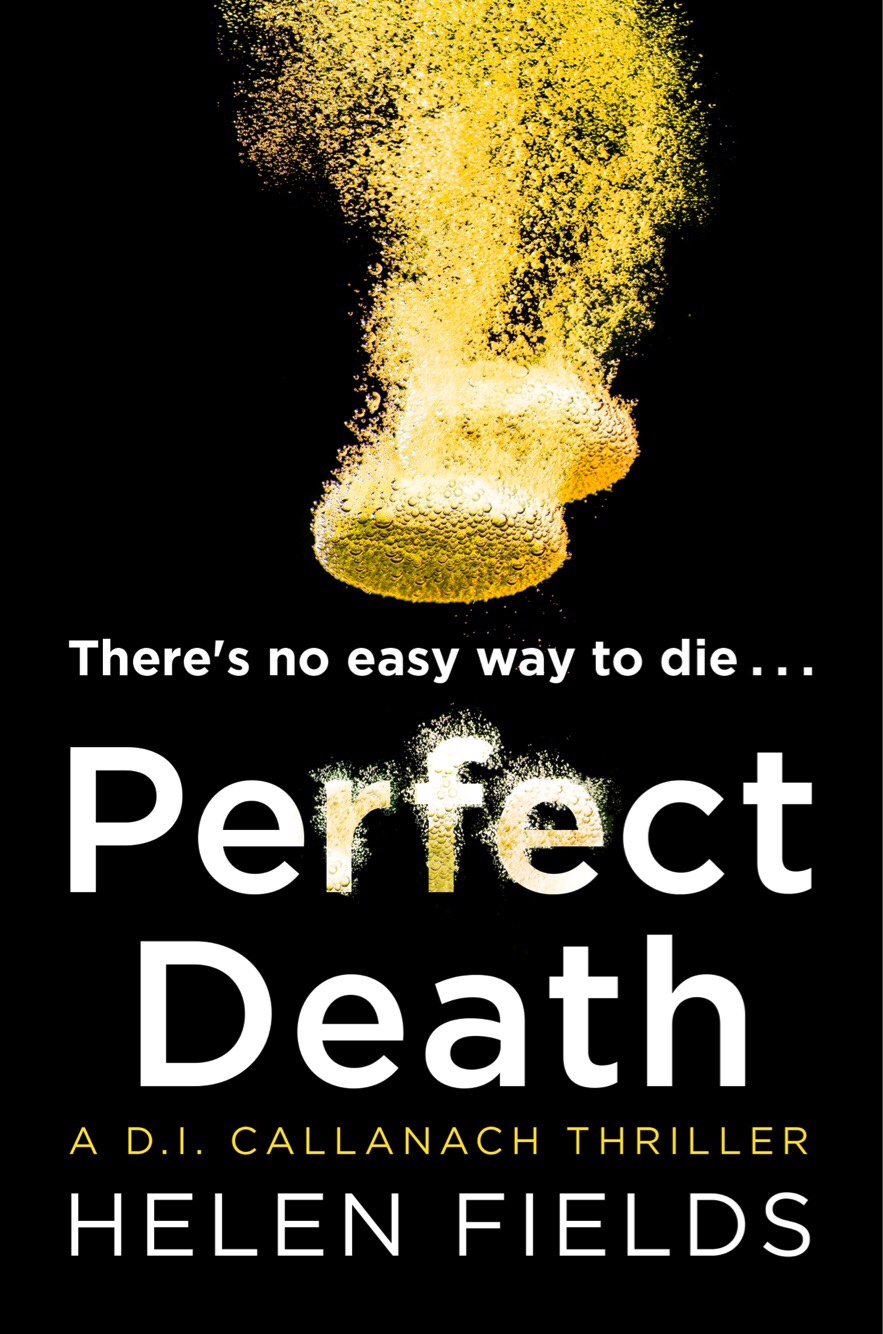
Blog Tour: Perfect Death by Helen Fields @Helen_Fields @AvonBooksUK

Goodreads|Amazon US|Amazon UK

Release date: January 25, 2018

Publisher: Avon Books UK

Genre: Mystery/Thriller

Blurb:

There’s no easy way to die…

Unknown to DI Luc Callanach and the newly promoted DCI Ava Turner, a serial killer has Edinburgh firmly in his grip. The killer is taking his victims in the coldest, most calculating way possible – engineering slow and painful deaths by poison, with his victims entirely unaware of the drugs flooding their bloodstream until it’s too late.

But how do you catch a killer who hides in the shadows? A killer whose pleasure comes from watching pain from afar? Faced with their most difficult case yet, Callanach and Turner soon realise they face a seemingly impossible task…

Hey everyone! I’m so excited to be sharing an extract from Perfect Death today as part of the blog tour. This series has been on my TBR for far too long and 2018 will be the year I get on it.

Extract:

Extract Four: Chapter 23, p.156

He got up, brushing spiders from his head, pointing the torch back towards the rear of the hut. Pushing between a couple of old ale barrels, he tried not to breathe in the foul air, wishing he’d ignored Jones’ request and brought backup. As he avoided an old badger trap, his foot landed on something that managed to be both soft and crunchy at once. He shone the light downwards as he stepped back. The fingers on which he’d trodden curled inwards. Callanach knelt down, shining the light up and down the torso, knowing that it was too late. The bodies of the living didn’t generally smell like this. Jones has lost control of his bowels, bladder too from the looks of the floor. Laying down the torch and taking a knife from his pocket, he cut through the gaffer tape that had been sealed around Jones’ neck and removed a bag from the head.

‘Louis?’ Callanach said, tapping his cheek lightly. Something felt wrong. Jones’ face, whilst warm, wasn’t moving the way he expected it to. The lower half was stiff and inflexible. Holding the torch in his mouth, Callanach got a better look. As he slid one hand beneath Jones’ head, his fingers plunged into a warm wet mess, stringy to touch with boney splinters in the mix. ‘Fuck!’ He pulled his hand back out, watching the grey red mixture slide off his fingertips. Louis Jones was dead, and no amount of resuscitation was going to make any difference. His brains were currently decorating a wide section of the floor, the entrance wound a neat black hole on his forehead. Flashing the light slightly downwards, Callanach took a closer look at Jones’ mouth. His bottom lip had been pulled upwards over the top lip and a nail gun had been used to send an industrial pin into his upper palate.

Oohh that’s so creepy!! Just my style haha.

Blog Tour: Appetite by Anita Cassidy @AnitaCassidy76 @RedDoorBooks

Goodreads|Amazon

Release date: January 11, 2018

Publisher: Red Door Books

Blurb:

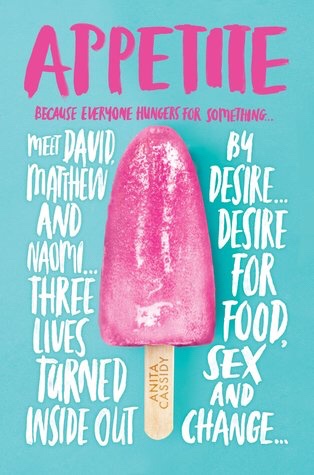
Because everyone hungers for something…

Food and Sex: two appetites the modern world stimulates, but also the ones we are expected to keep under control. But what happens when we don’t?

Embarking on an affair, lonely wife and mother Naomi blossoms sexually in a false spring while David, the fattest boy at the local comprehensive and best friend of her son, struggles to overcome bullying and the apathy of his divorced mother.

David finally starts to learn about the mechanisms of appetite through a science project set by his intelligent but jaded teacher, Matthew. David’s brave efforts to change himself open Matthew’s eyes to his activist girlfriend’s dangerous plans to blow up VitSip, a local energy-drink company where Naomi works.

At the mercy of their appetites, this exciting debut novel shows that some hungers can never be satisfied…

Welcome to my stop on the blog tour for Appetite! I have an extract from the book to share today.

Chapter One Monday 7th January

David

Looking down, resting awkwardly against a lamp post, David kept out of sight of the school for a little longer. He always did this. And he always spent the time hoping, after each blink, that his eyes would open to find the buildings blown up or the pavement underneath him bathed in a strange, pale light before it fell away, his body being sucked up into a spaceship full of friendly, intelligent (female) aliens. But the bomb never fell, the UFO never came. With appalling consistency, it always got to 8.45, the bell always began to ring and he always had to walk over the road and through the gates.

Even while he had been enjoying the coloured lights and comforts of the recent Christmas holidays, this had been on the edge of his mind, causing the same lingering sense of unease as a receding nightmare. When he wasn’t imagining the destruction of the school or the convenient abduction of himself, he was watching. Watching grey trousers and grey jackets against grey concrete. A parade of uniform and uniformity marching steadily towards black gates holding black bags. And there, with blazers stretched across their backs, bunching up under the armpits and pulled taut across the hips, were the fat kids. Winter coats hung open loosely. They rarely fitted properly anyway, but after Christmas? Well, you could just forget about buttons then. They were, as always, bringing up the rear, looking only at the ground as they lumbered towards the looming metal gates, some of them quickly finishing chocolate bars and bags of crisps as they walked, the actual cause of and the imagined cure for their misery scrunched up and tossed on to the pavement before they entered the playground.

I hate fat kids, thought David. Everyone hates fat kids. Or pities them. Which is even worse.

Watching them as they went through the school gates was like watching a grinding-machine at work. Hard cogs relentlessly turning, breaking things down, chewing them up. Once he stepped inside he was trapped: as far from home and its comforts as he would ever be.

Today, he thought, should be a good day. Today, I am feeling unusually angry. These days, the days when he felt this rage, were the easy ones. It was the sad days he found the hardest to bear. Days when the sadness was there when he woke up in the morning and followed him until nightfall like a weary shadow. The sadness was viscous, a tar pool that pulled at him, wanting to drag him under.

But today he was angry, and the edge that gave him made what lay ahead seem more tolerable.

The bell rang.

Crossing the invisible line that traced across the tarmac, he felt his back go rigid.

‘Hey, fat fuck!’

‘Who ate all the mince pies? Pretty bloody obvious from here…’

‘I didn’t think it was possible for you to get fatter, but Jesus…’

And it wasn’t just the older kids. The younger ones taunted him too. Taunted and laughed.

Automatically and unconsciously, David’s shoulders hunched and his head went down. It was an attempt, no matter how futile, to minimise the space he filled. The rage, though it formed a hard carapace around his mind, was as ineffectual at protecting him from the verbal assault course he was enduring as the rounding of his shoulders was at disguising a simple fact. The simple fact that, of all the fat kids, he, David, was the fattest.

Blog Tour: Forget Her Name by Jane Holland #GuestPost @janeholland1 @rararesources

Goodreads|Amazon US|Amazon UK

Release date: January 25, 2018

Publisher: Thomas and Mercer

Genre: Mystery/Thriller

Blurb:

Rachel’s dead and she’s never coming back. Or is she?

As she prepares for her wedding to Dominic, Catherine has never been happier or more excited about her future. But when she receives an anonymous package—a familiar snow globe with a very grisly addition—that happiness is abruptly threatened by secrets from her past.

Her older sister, Rachel, died on a skiing holiday as a child. But Rachel was no angel: she was vicious and highly disturbed, and she made Catherine’s life a misery. Catherine has spent years trying to forget her dead sister’s cruel tricks. Now someone has sent her Rachel’s snow globe—the first in a series of ominous messages…

While Catherine struggles to focus on her new life with Dominic, someone out there seems intent on tormenting her. But who? And why now? The only alternative is what she fears most.

Is Rachel still alive?

I’m so excited to be one of the stops on the blog tour for Forget Her Name today! I have a fabulous guest post from the author to share.

Guest Post:

A Day in Your Life by Jane Holland

Although I do the same things most days, the order in which I do them is usually different, and that’s the way I like it. I enjoy the routine and discipline of daily writing. But I’m easily bored, and anything too same-old or rigid would drive me crazy. So though I write every day, for anything between one to five hours, it tends to happen in a different place and at a different time from day-to-day.

I get up early with the kids, two of whom go to school. My first hour after they’ve left is usually spent on answering emails, dealing with admin, and social media (a must these days for writers who want to find and keep a readership). I then either write during the day, or put it off until the evening, depending on daily circumstances.

Some days I go out to a café and write there, straight to my laptop. In spring and summer, I sit on my decking in the sunshine and write long-hand, much to the fascination of our two cats, who often come to see what I’m doing! I also rent a Cornish beach hut fifteen minutes away, with a stove to make coffee, where I can work all day, weather permitting.

Sometimes I sit up in bed to work. Sometimes I use my desk. Sometimes I stay up to write after everyone else is in bed, late into the night. Occasionally, I will dictate rather than type, to save my fingers!

I take numerous hotel breaks where I work flat-out over the kids’ half-term or a long weekend. I also rent a cottage twice a year for a week or two, and hunker down there on my own, achieving a great swathe of fast writing without interruption while my husband holds the fort.

After a year’s break, I’m currently home-schooling my youngest daughter again – I have five kids altogether – so that’s made work a little complicated. Luckily, Indigo also loves cafés and the beach hut! So we sit opposite each other, and I write my book for an hour or two while she does school work or perhaps some sketching. (Art is her favourite subject, and she’s very talented at it; she wants to be a professional artist when she grows up.) During school days, I tend to write later in the day, so I can spend more time teaching her. Then I catch up with my word count late at night or at weekends!

As you can see, my only constant is the fact that I get the writing done on a daily basis. Everything else is subject to change! My minimum daily word count is 1000 words, which is an industry standard, but I always hope for double that. On good days, or on retreat, I write nearer five thousand. I tend to edit as I go along, getting everything as perfect as possible, rather than write a ‘dirty fast’ draft. This is because I get bored with a book after it’s done, and hate rewrites!

In the afternoon, all my kids return to the house, and things get too rowdy for work. I usually cook the children their meal earlier than ours, so I spend at least an hour, sometimes more, in the kitchen most evenings. But that means I get to hear what everyone has done during the day, which I love, being a very hands-on mum. Often our conversations turn into an impromptu lesson about politics, history or science … a hang-over from the days when all my kids were home-schooled! But my teenage twin boys are autistic, and love accumulating facts, so they seem to enjoy the extra learning time.

Later, I eat a meal with my husband, and we watch the news, or a film or television show together. That’s an important time for us, to reconnect and share anecdotes about our day. We’re both screen fiends, so we’re often also online while watching a boxset or Netflix, sharing news developments or other internet stuff.

If I’m up against it with a deadline, I might then crack on with my novel or network on social media or write a blog post like this for a couple more hours after my husband’s gone to bed. (He has to get up much earlier than me!) Otherwise, I’ll go to bed and devour a couple of chapters of my current reading book until my eyelids close …

And that’s essentially a typical day for me as a novelist.

Love getting a peek into a typical day for Jane, thanks so much for sharing!

About the Author:

Jane Holland is a Gregory Award–winning poet and novelist who also writes commercial fiction under the pseudonyms Victoria Lamb, Elizabeth Moss, Beth Good and Hannah Coates. Her debut thriller, Girl Number One, hit #1 in the UK Kindle Store in December 2015. Jane lives with her husband and young family near the North Cornwall/Devon border. A homeschooler, her hobbies include photography and growing her own vegetables.

Social Media Links –

https://twitter.com/janeholland1

https://www.facebook.com/jane.holland.1253

Facebook Author Page: https://www.facebook.com/JaneHollandAuthor/

Blog Tour: The Innocent Wife by Amy Lloyd @AmyLloydWrites #TheInnocentWife

Goodreads|Amazon

Release date: January 25, 2018

Genre: Mystery/Thriller

Blurb:

A young schoolteacher falls for a man on Death Row whom she believes is falsely accused, only to begin wondering after their marriage – and his release.

Twenty years ago Dennis Danson was arrested for the brutal murder of Holly Michaels in Florida’s Red River County. Now he’s the subject of a Making a Murderer-style true crime documentary that’s taking the world by storm – the filmmakers are whipping up a frenzy of coverage to uncover the truth and free the victim of a gross miscarriage of justice.

Samantha may be thousands of miles away in Britain, but she is as invested in Dennis’s case as any of his lawyers. Perhaps even more so, as her letters to the convicted killer grow ever more intimate. Soon she is leaving her life behind to marry Danson and campaign, as his wife, for his release.

But when the campaign is successful, and Dennis is freed, events begin to suggest that he may not be so innocent after all. How many girls went missing in Red River, and what does Dennis really know?

I’m so delighted to welcome you to my stop on the blog tour for The Innocent Wife! I have a wonderful guest post from the author to share.

Guest Post:

My Top 5 True Crime Reads

This list does not include In Cold Blood by Truman Capote. We all know we’re supposed to read In Cold Blood and we totally will! No need to keep banging on about it here.

1. Killing For Company – Brian Masters

Brian Masters has written a few great true crime books but this was my personal favourite. It’s about Dennis Nilsen, a serial killer active in Britain in the late 70s and early 80s. Nilsen murdered young men and kept the bodies in his home, dressing them up and sitting them on the sofa for company. If that isn’t the darkest thing you can imagine then I am afraid of you.

Brian Masters shows an incredible amount of empathy towards Nilsen and a lot of people have been critical about the way in which he writes about him in the book. It’s a unique dynamic between writer and subject and offers a deep insight into the mind of a serial killer.

2. The Stranger Beside Me – Ann Rule

There will never be another true crime like this. Ann Rule was an established true crime author when one of her friends (a fellow volunteer on the crisis helpline she worked at a few nights a week) became a suspect in a series of local murders. Surely good-looking, mild-mannered Ted Bundy couldn’t be involved in anything like that?

How much Ann Rule suspected Bundy’s guilt and the ethical problems that arise from her continued friendship with him only makes this book more fascinating.

3. Columbine – Dave Cullen

The Columbine high school shooting was one of the most shocking crimes of my lifetime.

In an attempt to understand the horrific killings a narrative was quickly written to explain the motives of the teenage boys responsible. We were led to believe these were misfits, bullied relentlessly by their classmates, and taking revenge in the most brutal way imaginable. It was a fake narrative perpetuated by Bowling for Columbine and one that made me, as a teenager, believe that I had anything in common with Eric Harris and Dylan Klebold.

This book completely destroys that narrative and offers a well-researched account of what happened and what really motivated the killers.

4. The Adversary – Emmanuel Carrère

One day Jean-Claude Romand killed his entire family with a shot gun and set fire to their home in order to cover his tracks. Friends are shocked and confused. Jean-Claude can’t possibly have done this. He’s a loving father and husband, a doctor working with the World Health Organization, a perfectly happy and ordinary man.

The Adversary tells the story of a double-life and seeks to understand Jean-Claude on a deeper level. A bizarre and dark story handled with genuine class and sensitivity.

5. The Fourth State of Matter – Jo Ann Beard

The less I say about this, the better. It’s my favourite personal essay/short story of all time and you can read it on the New Yorker website.

Blog Tour: Disposal by David Evans @DavidEwriter

Goodreads|Amazon US|Amazon U.K.

Release date: January 16, 2018

Publisher: Orchard View Publications

Genre: Crime Fiction

Blurb:

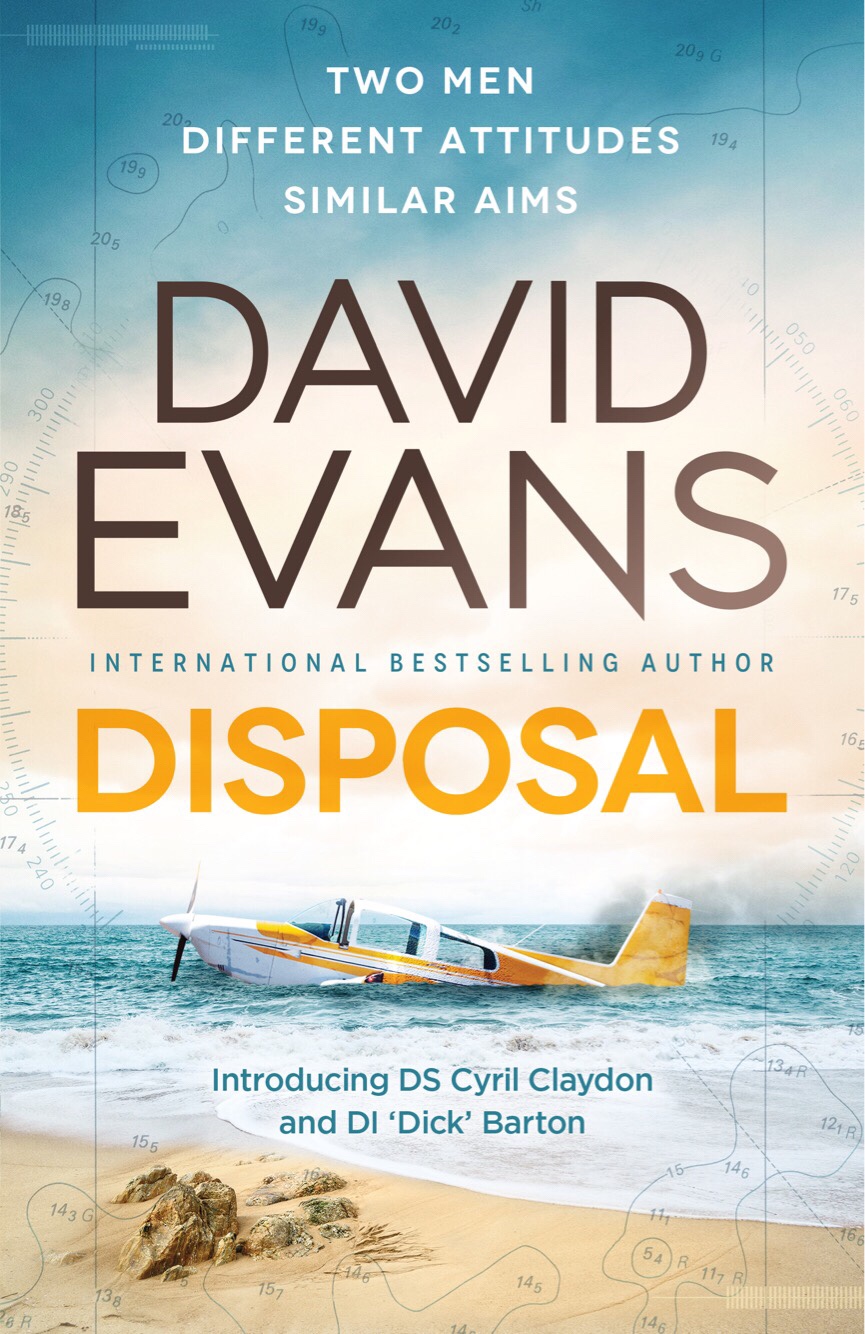
August 1976 and it seems as though the long hot summer will never end. Early morning at Clacton on the north Essex coast, a light aircraft takes off from the airstrip but struggles for height and crashes into the sea. First on the scene, Sergeant Cyril Claydon pulls the pilot’s body from the wreckage. But something else catches his eye. A bulky package wrapped in black plastic is on the passenger seat. Returning to investigate, he makes a grim discovery – another body. And so begins a series of events that puts him and others in danger as he is drawn into the investigation, having to work alongside DI ‘Dick’ Barton, a man with totally alien attitudes. Can they work together?

I’m so pleased to be a stop on the blog tour for Disposal today! I have a fantastic interview with the author to share.

Q & A:

Q Why did you write a book?

I enjoyed reading and have always had creative thoughts. Years ago, I joined a Creative Writing Nightclass and, after a few terms of writing various exercises, I realised a couple of those were linked in some way. After that, it was a small step to see if I could write more on the same theme that would eventually form a book. And so the first draft of what became Trophies was born.

Q Do you write every day?

When I have an active project, I tend to write every day but sometimes, I take a break for a short while – recharge batteries and provide valuable thinking time.

Q Do you work to a plot or do you prefer to see where the idea takes you?

Initially, I need a plot – that is vital. For instance, for the last 3 projects, once I have the ideas, I will write around 10,000 words and pause. At that point, I am able to judge if it ‘has legs’. Then I’ll look to draft a loose synopsis. Once I have something I think will work, I carry on writing. Every now and then, I’ll go back to the synopsis and tweak it to line up with what has been written. I use the synopsis as a guide but don’t allow it to dictate rigidly if my characters or plot take me ‘off message’. That way creativity isn’t stifled. Also, when the first draft is complete, it is a matter of one last tweak to have a completed synopsis – one of the hardest tasks to perform when writing.

Q How long does it take you to write a book?

As I’ve written more, I’ve found that the time to write each book has shortened. The first draft of Trophies took me over 2 years, but that was coping with a full-time job. It has also gone through 8 further drafts. Torment took about 2 years on and off (again with a full-time job) but has required less re-drafts. Talisman was about 18 months in the drafting whilst Disposal took about 16 months. However, other writing matters had been prioritised during the writing of Disposal – like achieving a publication deal for the Wakefield Series. I also like to have 2 or 3 threads running through the books and that takes time and concentration to meld them together.

Q What’s the worst thing about writing a book?

Getting it out there, all the marketing and promotional work that has to be done. Like most writers, I’d rather just think about the next one and create.

Q What’s the best thing about writing a book?

When your characters take over. For instance, when I was writing Disposal, I had my two main characters, Cyril and Barton in the front seats of a car. As they drove, it was as if I was in the back seat listening to their conversation. When we set off, I didn’t have a clue what they were going to say, but they obviously did. That was so satisfying.

Q Why did you choose your particular genre?

Because crime fiction is what I enjoy reading. I think if you don’t enjoy what you’re writing that will become apparent in the finished work.

Q If you had to write in a different genre, which would you choose?

Possibly some non-fiction historical work might interest me.

Q Which book character do you wish you had written?

It would have to be John Rebus, the brilliant creation of Ian Rankin.

Q What do you think are the best and the worst things about social media?

The best would probably be the instantaneous feedback and contact it allows. The worst has to be the ability of it to run away with time – possibly our most precious commodity.

A few questions, just for fun:

Q If you could be invisible for a day, what would you do?

That would be difficult. The danger with that would be coming across conversations others may be having about you which it might be best not to learn. A better option would be the ability to go back in time as an invisible person to soak up the experiences and atmosphere of earlier times.

Q If I joined you on your perfect day, what would we be doing?

It would be on a warm summer’s day, a visit to a preserved railway to experience the sights sounds and smells of what I consider to be the art in motion of a steam locomotive. The aromatic mix of steam and hot oil is something difficult to describe. We’d have lunch at a pub followed by taking a well-behaved dog for a walk and allow our thoughts to drift to the latest writing project. Finally, we’d spend the evening with friends, back in the pub to catch up on what everyone had been doing.

Q What’s your signature dish?

Chilli con carne or Paella, both of which I seem to have mastered pretty well (so people tell me).

Q If you could be anyone for the day, who would you be?

I’m quite comfortable in my own skin and with my own company. However, for the benefit of this question, I’d like to be a contestant on The Apprentice. I’m not bothered about the prospect of winning, I’d just enjoy being alongside some of the dopy people who take part. Finally, in the boardroom, after all the other sycophants have tugged their forelocks and referred to the man as ‘Lord Sugar’, I’d take great delight in telling him to take his job and shove it before walking out!

About the Author:

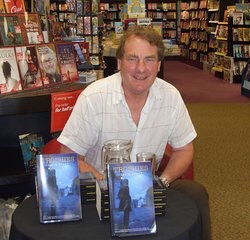
David Evans is a Scots-born writer who found his true love as well as his inspiration for his detective series, set primarily in Wakefield. Having written all his life, in 2012 he decided to go for it – successfully as the next year, in 2013, he was shortlisted for the CWA Debut Dagger Award.

The Wakefield Series became an International Bestseller in June 2017 with success in Canada and Australia as well as the UK. But now, whilst the Wakefield Series awaits the next instalment, David Evans has written Disposal, the first in the Tendring Series, a completely new detective series set in north Essex in the 1970s.

David Evans on Social Media

Author Website: http://www.davidevanswriter.co.uk/
Facebook Author Page: https://www.facebook.com/davidevanswriter/
Twitter: @DavidEwriter

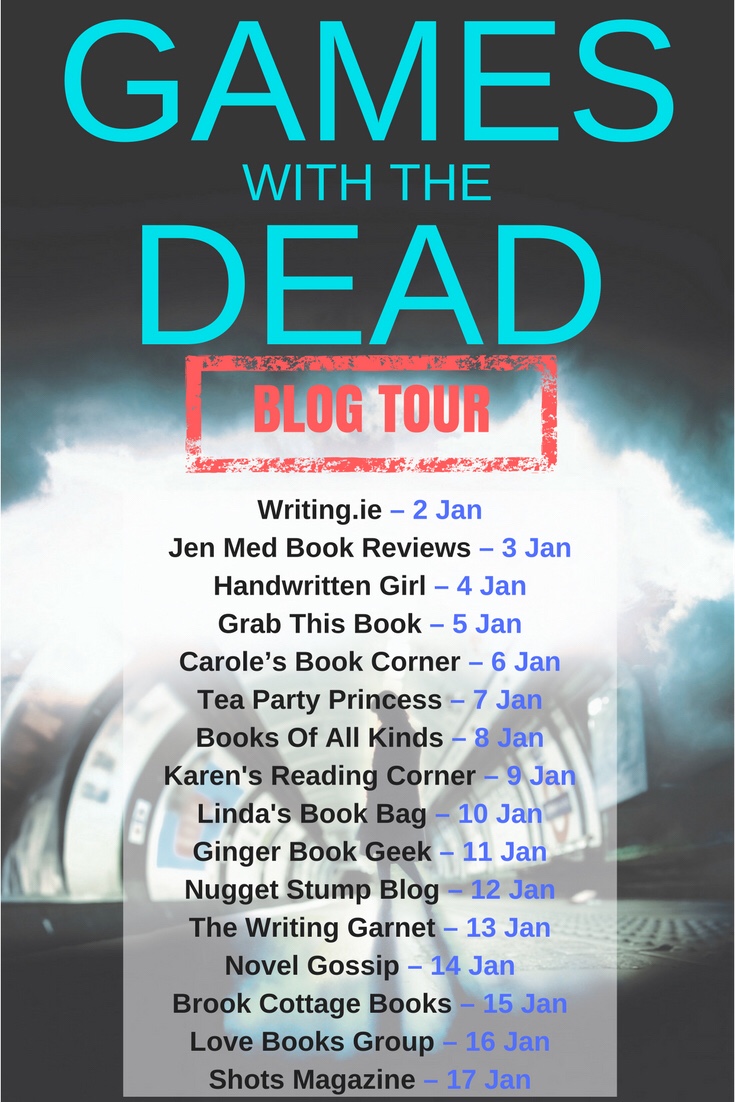
Blog Tour: Games With the Dead by James Nally @AvonBooksUK

Goodreads|Amazon US|Amazon UK

Release date: December 28, 2017

Publisher: Avon Books

Genre: Mystery/Thriller

Blurb:

Irish runaway. Insomniac. Functioning alcoholic.

Life is about to get complicated for DC Donal Lynch.

When a young woman is kidnapped, Donal is brought in to deliver the ransom money. But the tightly-planned drop off goes wrong, Julie Draper is discovered dead, and Donal finds his job on the line – a scapegoat for the officers in charge.

But when Donal is delivered a cryptic message in the night, he learns that Julie was killed long before the botched rescue mission. As he digs further into the murder in a bid to clear his own name, dark revelations make one thing certain: the police are chasing the wrong man, and the killer has far more blood on his hands than they could even imagine.

I’m so pleased to be one of the stops on the blog tour for Games With the Dead today! I have an extract from the book to share.

Extract:

Extract Seven: Chapter 7, pp.49-50

‘There were two obvious fracture injuries to the back of her skull, both about a week-old and caused by a blunt instrument. I’ll be suggesting these were inflicted nine days ago when she was first abducted.

‘I found chain-like marks around her right ankle; she had been forced to wear some sort of restraint or leg iron. The redness of the injury shows it was caused before death. I found no chafing marks around her wrists though, which seems odd as this is universally the preferred method of restraint.

‘I found another ligature mark running along the back of her neck. Her tongue was protruding through clenched teeth which you normally find in people who’ve hanged themselves. She must have been throttled very violently at the end.

‘Her fingernails were undamaged and there were no marks on her forearms, the sort of defensive injuries that you’d expect if a victim had fought for her life. In other words, when the time came, she must have been restrained and strangled from behind, quickly and cleanly, which will provide some small comfort to her family.

We both need a drink after that. But Edwina’s not finished.

‘Now here’s an odd thing. The changes to Julie’s flesh show she’s been dead for about two days. That makes it impossible for me to determine if she’d been raped or sexually assaulted. But the insects in her body suggest she’s been exposed to air for a lot less time, I’d say between twelve and twenty-four hours.

‘There was also something really striking and bizarre about her appearance.’

She squints at her drink, as if still trying to make sense of it herself.

‘She was completely bald.’

Oohh I’m definitely intrigued!!

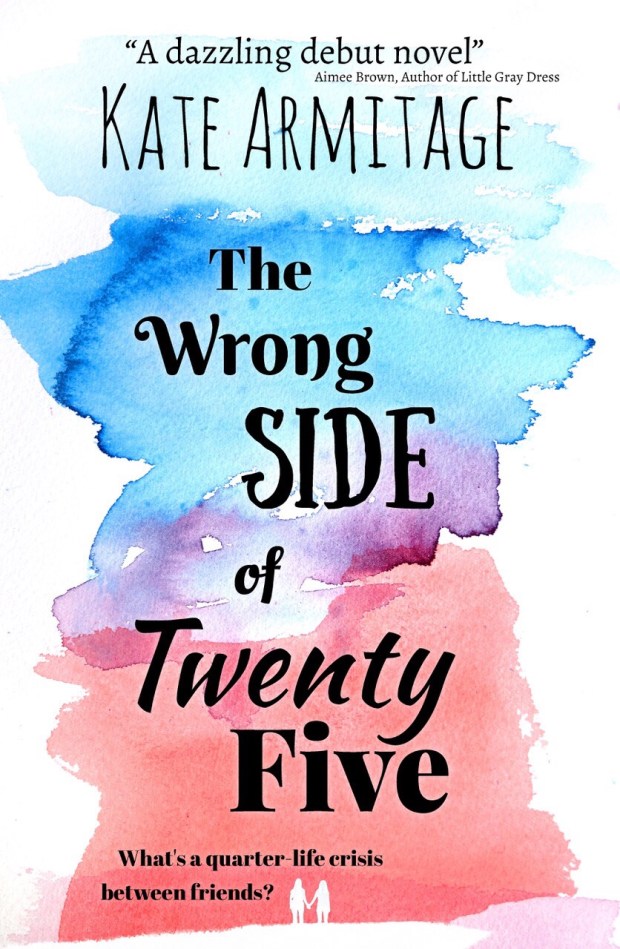
Blog Tour: The Wrong Side of Twenty Five by Kate Armitage @itskatearmitage @HelloChickLit

Goodreads|Amazon

Release date: December 28, 2017

Publisher: Crooked Cat Books

Genre: Women’s Fiction

Blurb:

With newsfeeds full of perfect pouts, hot-dog legs and the self-proclaimed hashtag-blessed, it’s hard not to feel inadequate. How has everyone figured out how to live their best life except you?

That’s what Kylie wants to know. She thought she would spend her twenty-fifth birthday having a mini-break not a mini-breakdown. After an evening of finger-food and snide remarks, Kylie decides that things must change. Naturally, Alexa disagrees. She doesn’t think anything needs to change and is quite happy plodding on with her best friend by her side. So, when everything changes for the better for Alexa, while it’s going from bad to worse for Kylie; will it tear them apart?

Hey guys, I hope the New Year is treating everyone right so far! I have a fabulous guest post from the author to share today.

Guest Post:

Girl-Meets-Girl

The Wrong Side of Twenty-Five is a love story. It might not be obvious looking at the title, front cover or blurb, but it is. It’s a love story, but not a romance. It’s not a romance and it’s not a boy-meets-girl. In fact, it’s a girl-meets-girl. It’s a girl-meets-girl-and-they-become-lifelong-friends kind of non-romantic love story. Wait, did I just create a new genre?

When I started writing this story, I knew I didn’t want it to be a romance. There’s nothing wrong with romance or stories about romance, but I just knew instinctively that this story wasn’t destined to be one. Maybe it’s because I’m not particularly romantic myself. I don’t care much for flowers and outlandish displays of affection. But love is different. Love isn’t only demonstrated by valentine’s day cards and romantic getaways. I don’t believe that the love you might have with a friend or family member is any less valid than one with a romantic partner.

In The Wrong Side of Twenty-Five, Kylie and Alexa are best friends. They have a kind of friendship where they know each other inside out. It’s a kind of friendship I’ve never experienced, which is possibly why I chose to write about it. I imagined a kind of best-friendship between Kylie and Alexa that was all-consuming and comforting. I imagined them talking all day, and knowing what the other is thinking and doing at any given time. It’s an intimate relationship without a sexual aspect.

As both Kylie and Alexa are single, they turn to each other as their primary source of love and reassurance and happiness. They like to consult one another on life choices and seek approval of the other in everything they do. This is normal, but not always healthy. When Alexa gets a promotion at work, she can’t wait to tell Kylie her news. That is, until Kylie finds herself fired. Alexa doesn’t see how she can tell Kylie given her new circumstances. The same happens soon after when Alexa starts seeing Shaun, just as Kylie is dumped. Although uncomfortable and awkward, Alexa should find a tactful way to break her news to Kylie. But instead, she feels so responsible for Kylie’s happiness that she instead decides to lead a double life: One where she is devoted entirely to Kylie and one where she is Kylie’s friend but also has an independent life. What could go wrong?

When Kylie inevitably finds out, she’s hurt, which is understandable. But she isn’t an appropriate amount of hurt, she’s lay-in-bed-eating-emergency-nutella devastated. She feels cheated and betrayed. A woman scorned, she confronts Alexa and like an atom splitting in to two, they blow up. After a huge fight, they separate, and their worlds change forever. So, actually, it’s a love story and a break-up story. It’s a girl-meets-girl-and-they-become-lifelong-friends-and-then-fall-out kind of non-romance love story. Catchy!

About the Author:

uthor: Kate Armitage

Author Bio: Kate Armitage is a writer from England who has three cats, two children and one husband. She lives an alarmingly conventional life which surprises everyone who speaks to her for more than five minutes. She spends her days knee-deep in play-doh and spends her nights elbow deep in manuscripts. Sometimes she lets the children also use the play-doh but only if they promise not to mix the colours.

You can find Kate on social media under @itskatearmitage or through her website www.katearmitageauthor.com.